 ICACT20250217 Slide.01
[Big Slide]
[YouTube] |
Chrome  Click!! |
 |
Introductory slide for presentation. |
| ICACT20250217 Slide.02
[Big Slide]
[YouTube] |
Chrome Click!! |
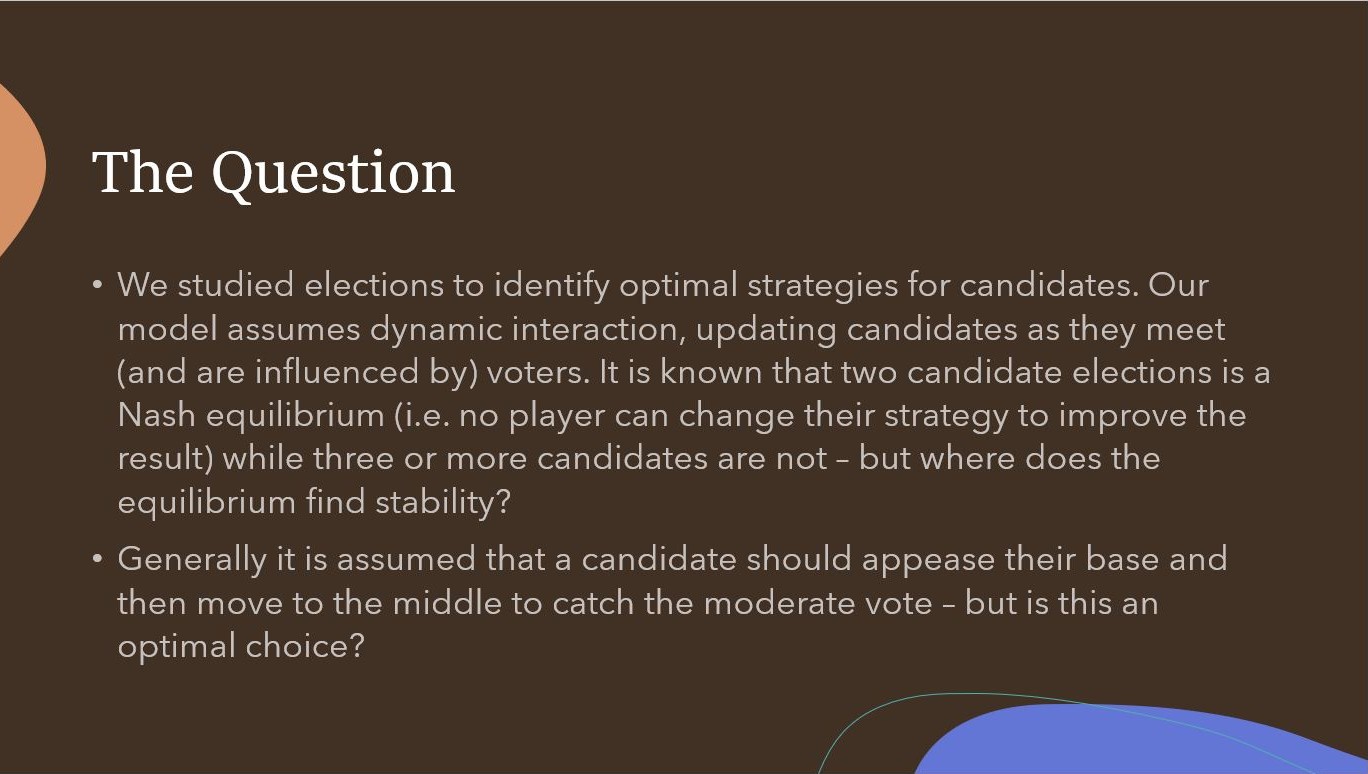 |
Introduction to the research question. We studied how elections work and optimal choices therein. We focused on how candidates and voters might influence each other. We explain a Nash equilibrium in this dynamic of not having a better way to choose. |
| ICACT20250217 Slide.03
[Big Slide]
|
Chrome Click!! |
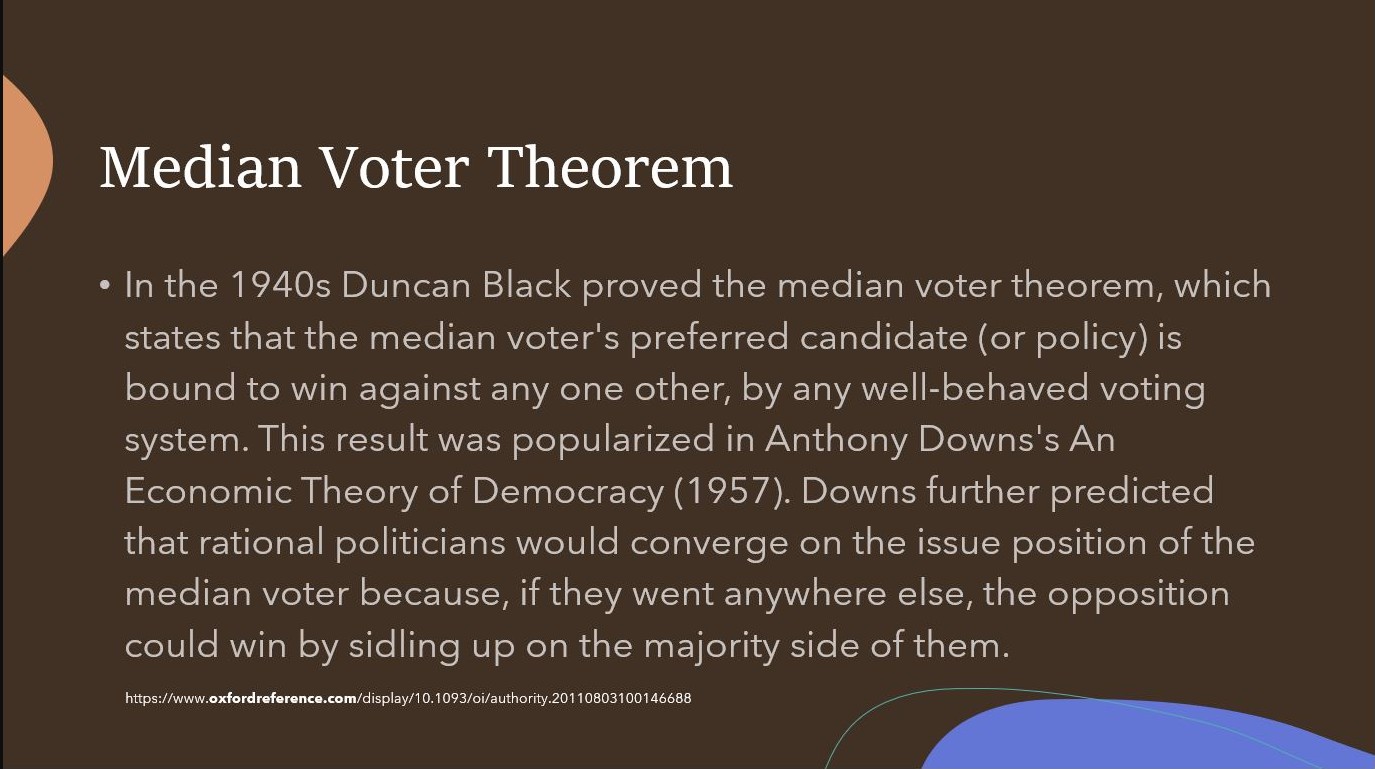 |
Discussion of background. We note the Hotelling and voter median theorem suggests that candidates move to the center. This is the intuitive approach, however not the necessary one. We show will show that other game theoretic options are available. |
| ICACT20250217 Slide.04
[Big Slide]
[YouTube] |
Chrome Click!! |
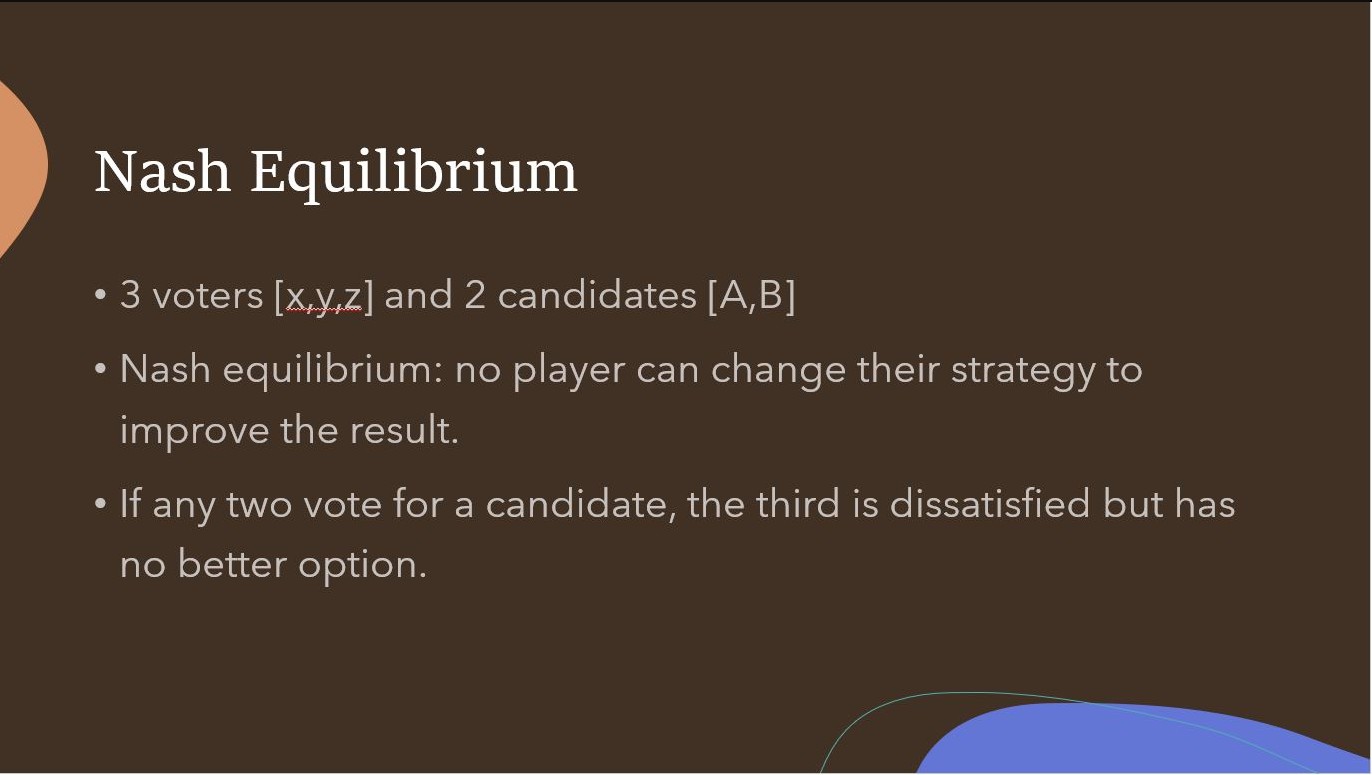 |
What is a Nash Equilibrium. We discuss the concept of voters with 2 or 3 candidates and show that 2 candidates an equilibrium can be reached, not so with three candidates |
| ICACT20250217 Slide.05
[Big Slide]
[YouTube] |
Chrome Click!! |
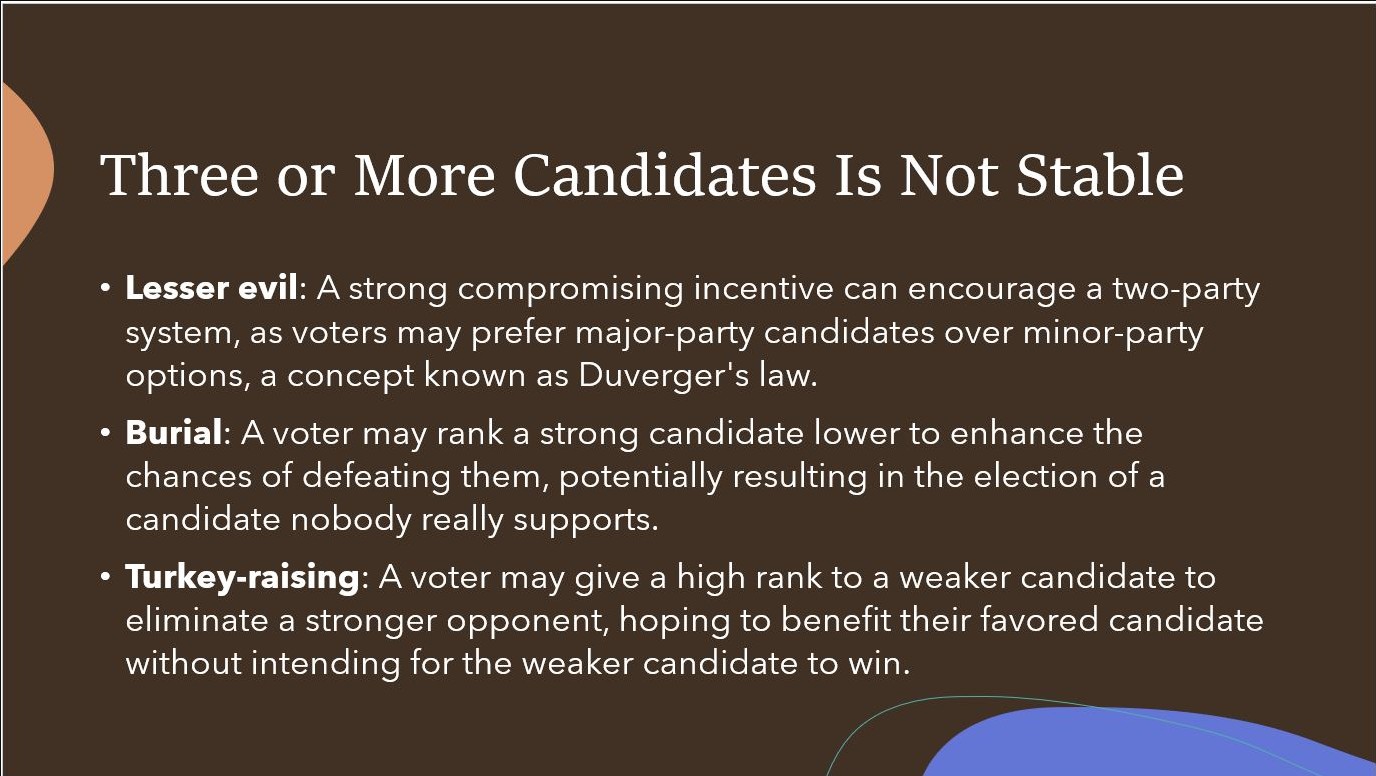 |
3 or more candidates is not stable. We explore several reasons why 3 candidate games are quite different and why they are not stable. This includes situations were optimal choices can indeed change - unlike in two candidate elections. |
| ICACT20250217 Slide.06
[Big Slide]
[YouTube] |
Chrome Click!! |
 |
Here we briefly discuss exactly what one would expect in an election such as general questions as to what a candidate would expect, how they should position themselves on different issues, and if there are rewards for such non-standard positions. |
| ICACT20250217 Slide.07
[Big Slide]
[YouTube] |
Chrome Click!! |
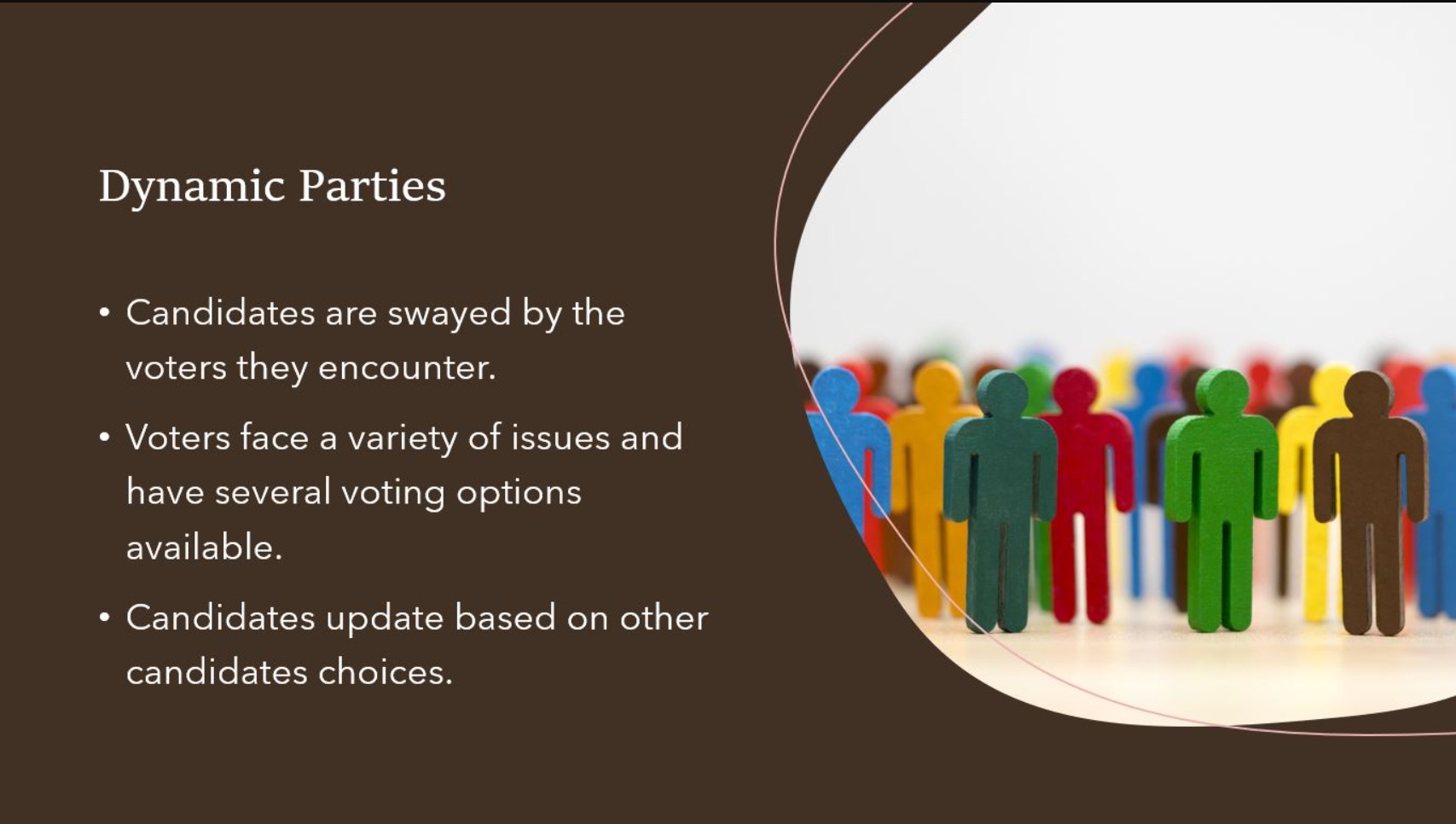 |
Here we note the general model assumptions we have built such as what candidates to when encountering voters, i.e. being swayed to some extent by them, what voters do, i.e. evaluate candidates on a number of issues, and how candidates would update their positions based on other candidates |
| ICACT20250217 Slide.08
[Big Slide]
[YouTube] |
Chrome Click!! |
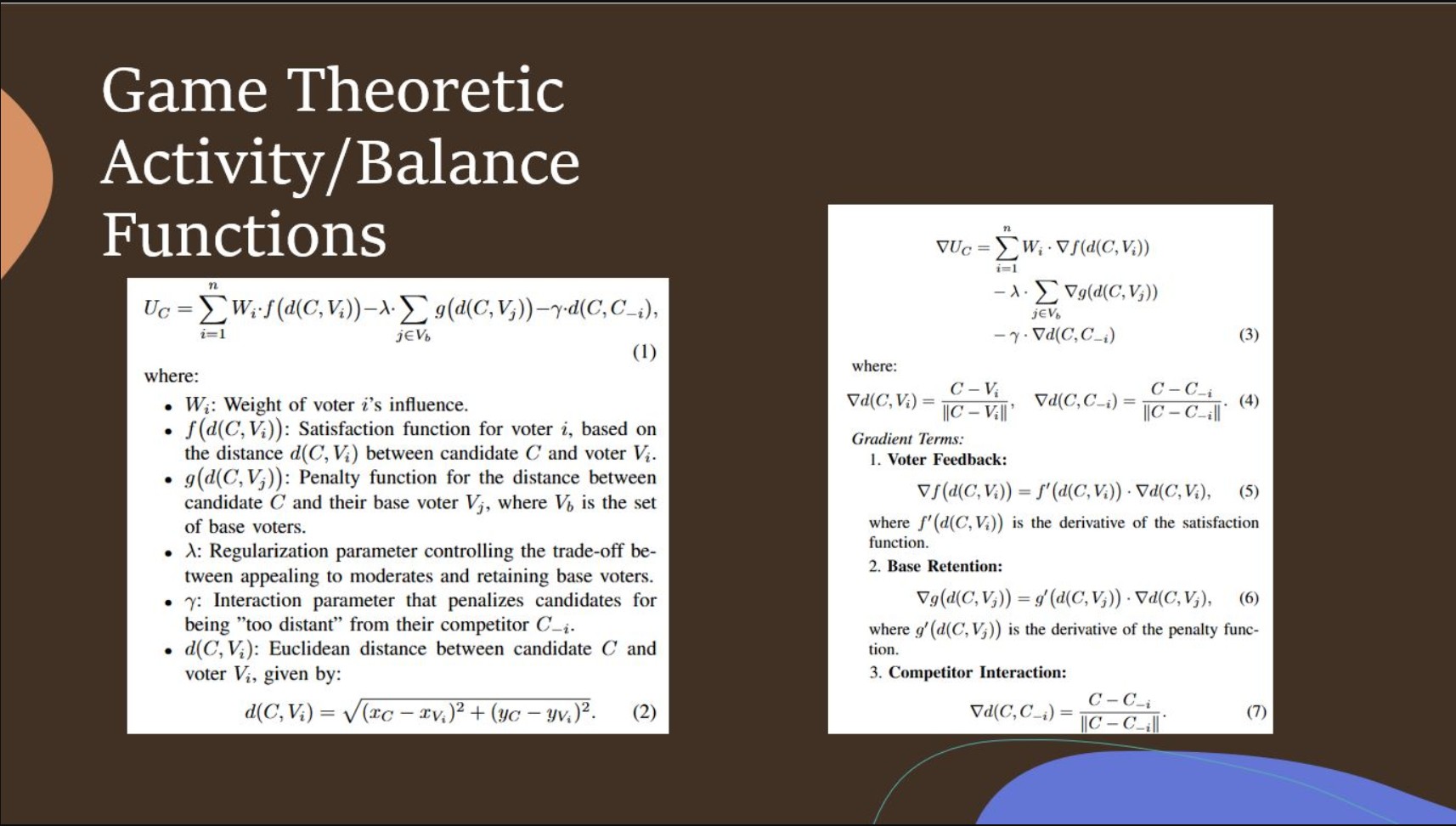 |
Here we show our mathematical structure. We show how candidates update with weights from voter influence, penalties for distancing themselves from their base, regularization parameters, and interaction parameters. We offer various potential metrics for evaluation. |
| ICACT20250217 Slide.09
[Big Slide]
[YouTube] |
Chrome Click!! |
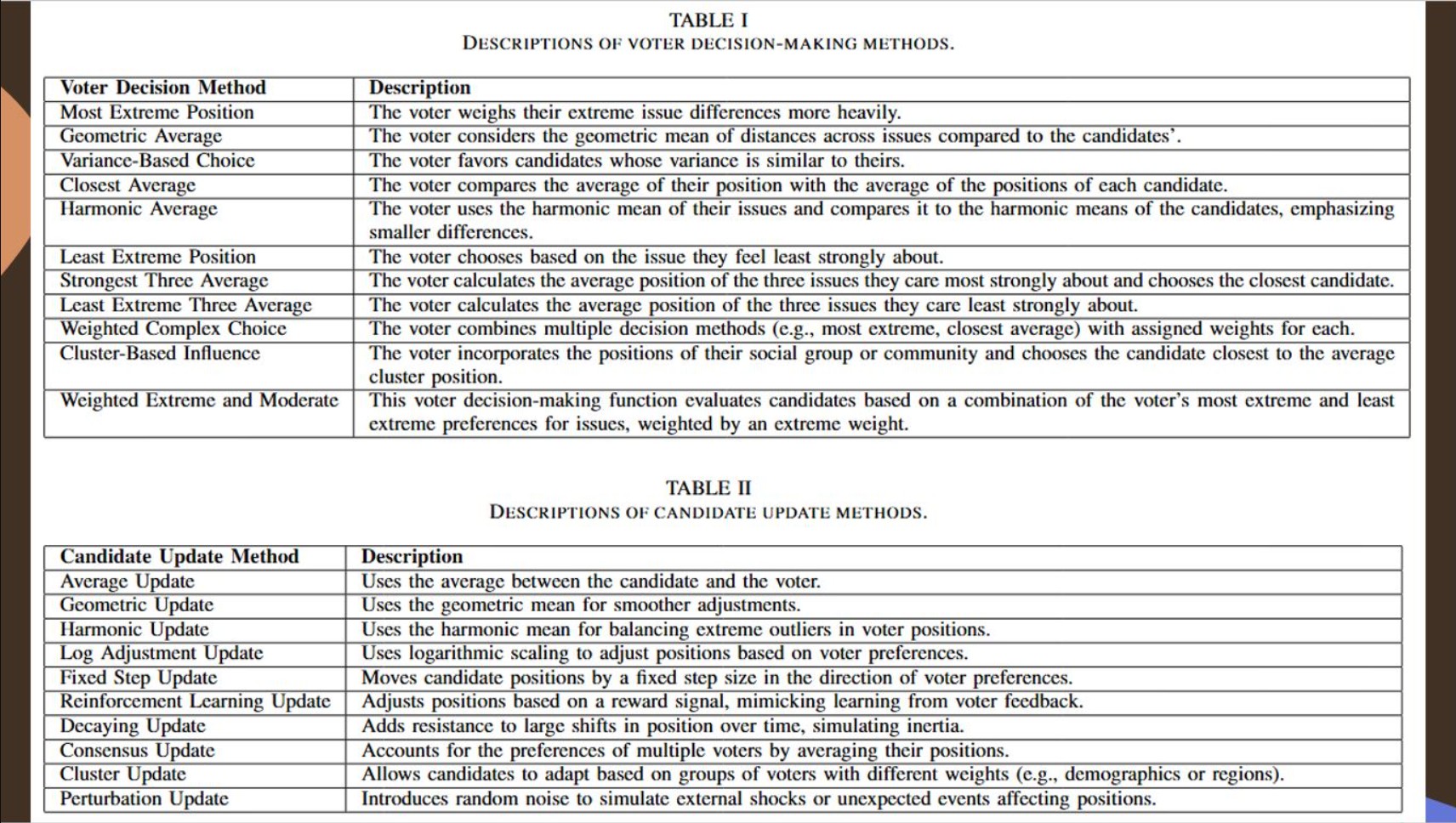 |
Here we show the options that were tested to evaluate possibilities in voter decision making as well as candidate update methods. It shows the different descriptions such as relates to learning methods and standard ideas as well as practical variations. |
| ICACT20250217 Slide.10
[Big Slide]
[YouTube] |
Chrome Click!! |
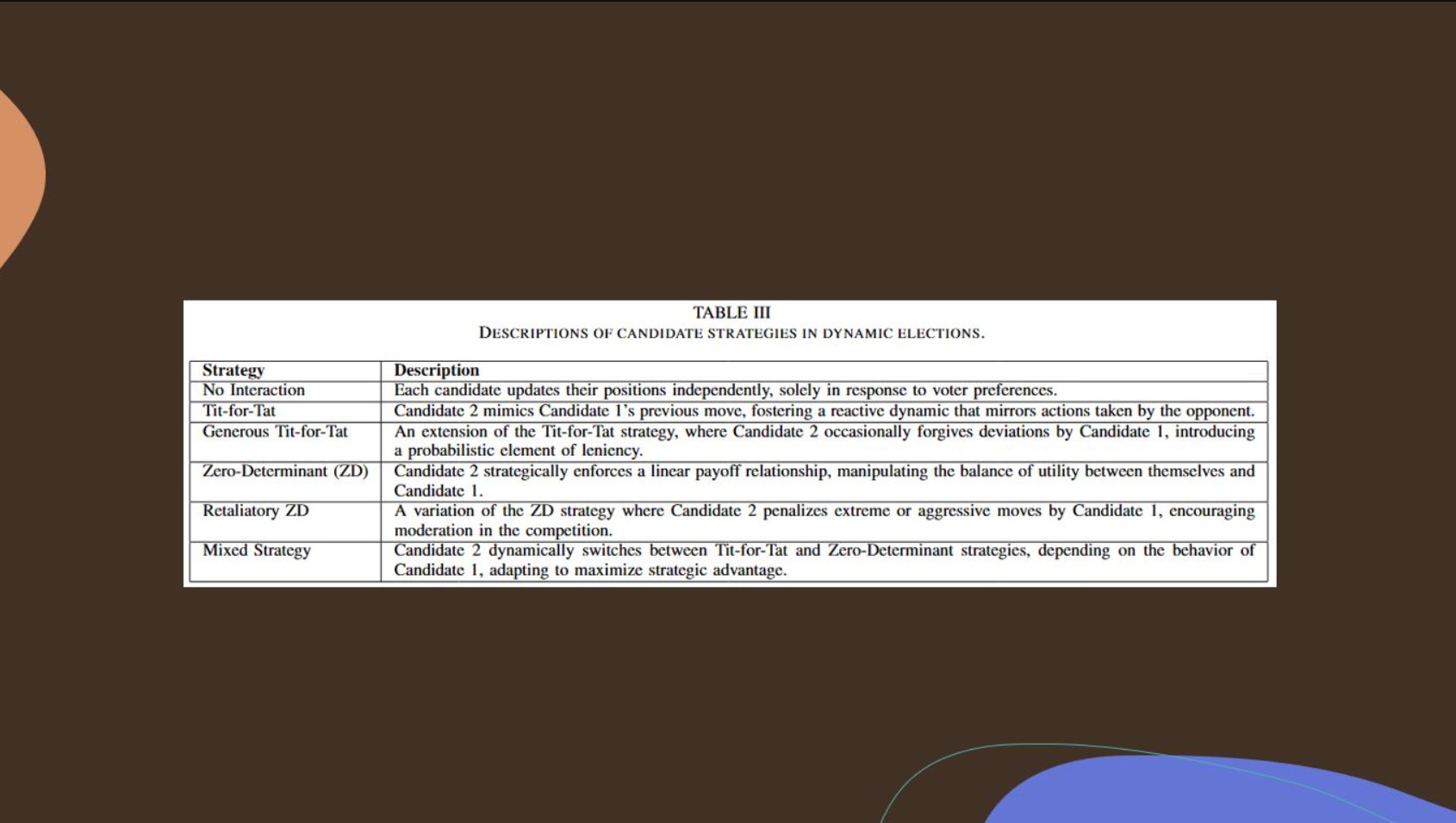 |
Here we display the dynamics involved in candidate vs candidate interactions such as game theoretic articulations related to strategies such as tit for tat, etc. with descriptions of each. |
| ICACT20250217 Slide.11
[Big Slide]
[YouTube] |
Chrome Click!! |
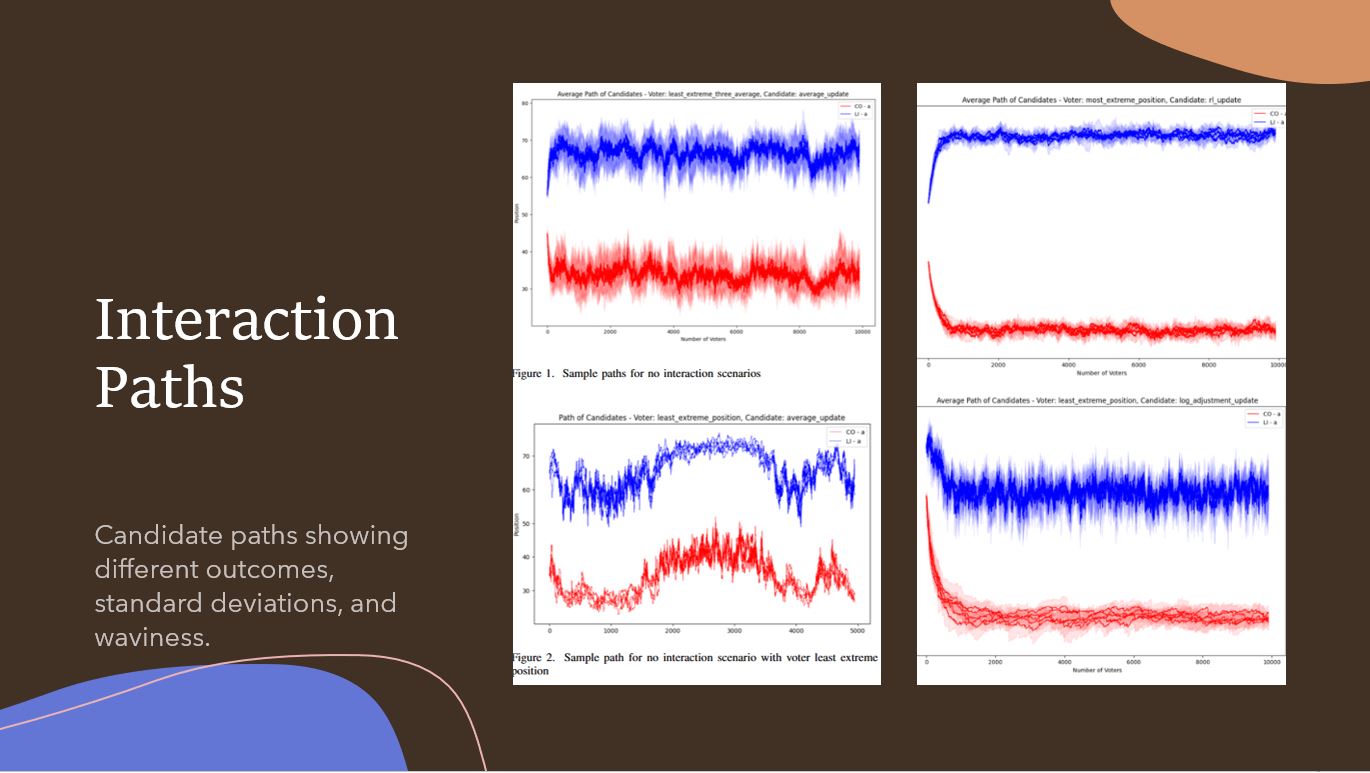 |
Interaction paths. Here we show that candidates can choose paths that are at extremes or move with waves based on their update models. It is an information gain in movement that therefore takes away from other candidates that don't move as much. |
| ICACT20250217 Slide.12
[Big Slide]
[YouTube] |
Chrome Click!! |
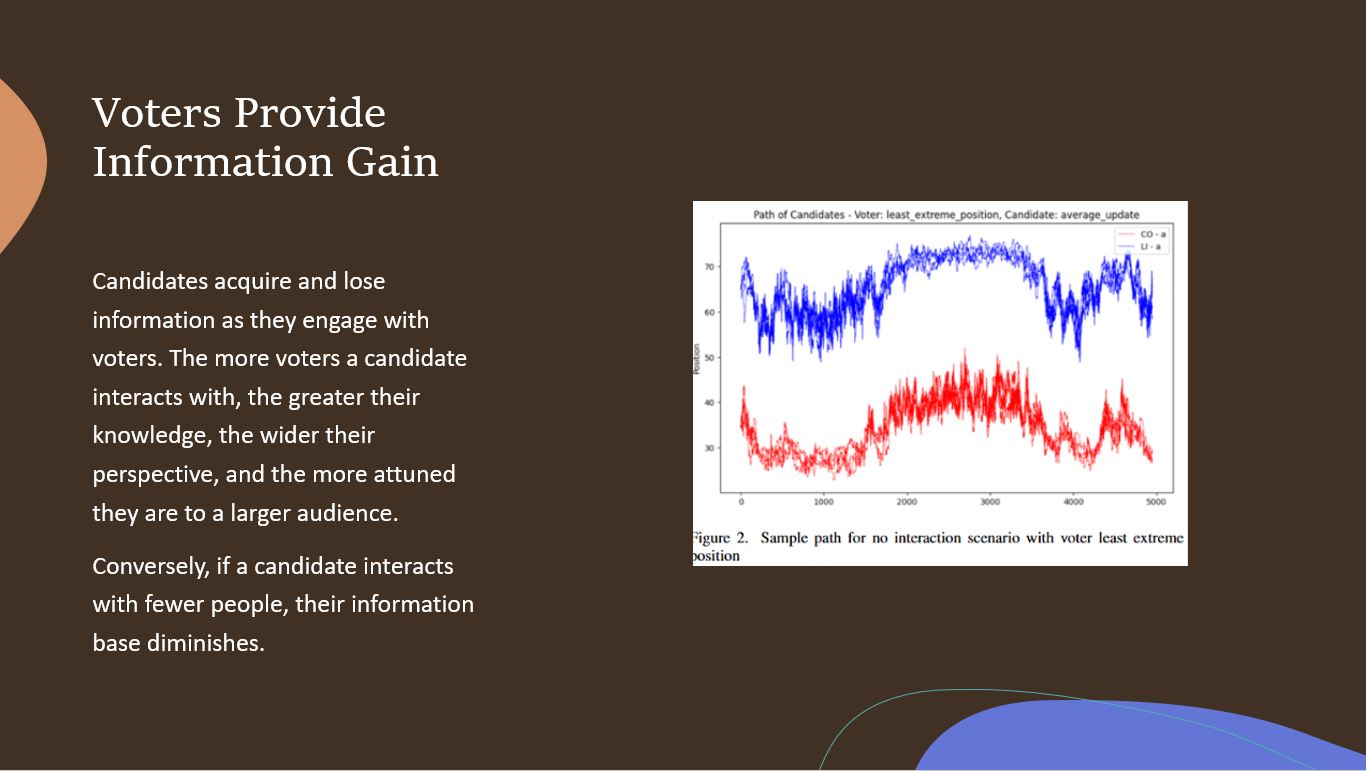 |
Showing of variation. We continue to explain that optimal paths can take into account only part of voters issues and therefore satisfy both moderates and more extreme supporters. |
| ICACT20250217 Slide.13
[Big Slide]
[YouTube] |
Chrome Click!! |
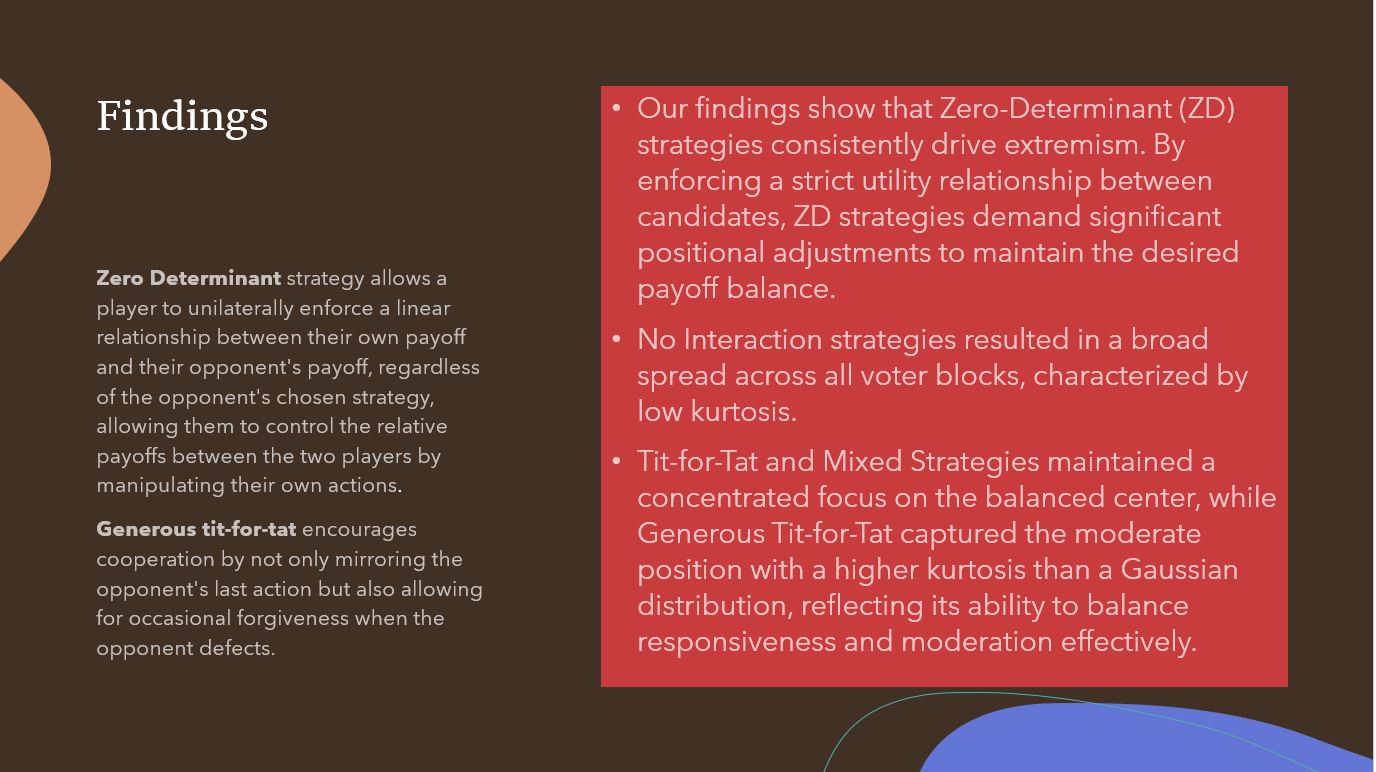 |
Findings 1. We note that candidates can update with ZD and therefore push themselves to extremes in order to punish the other candidate. Similarly, generous tit for tat can have benefits of satisfying many constituents. |
| ICACT20250217 Slide.14
[Big Slide]
[YouTube] |
Chrome Click!! |
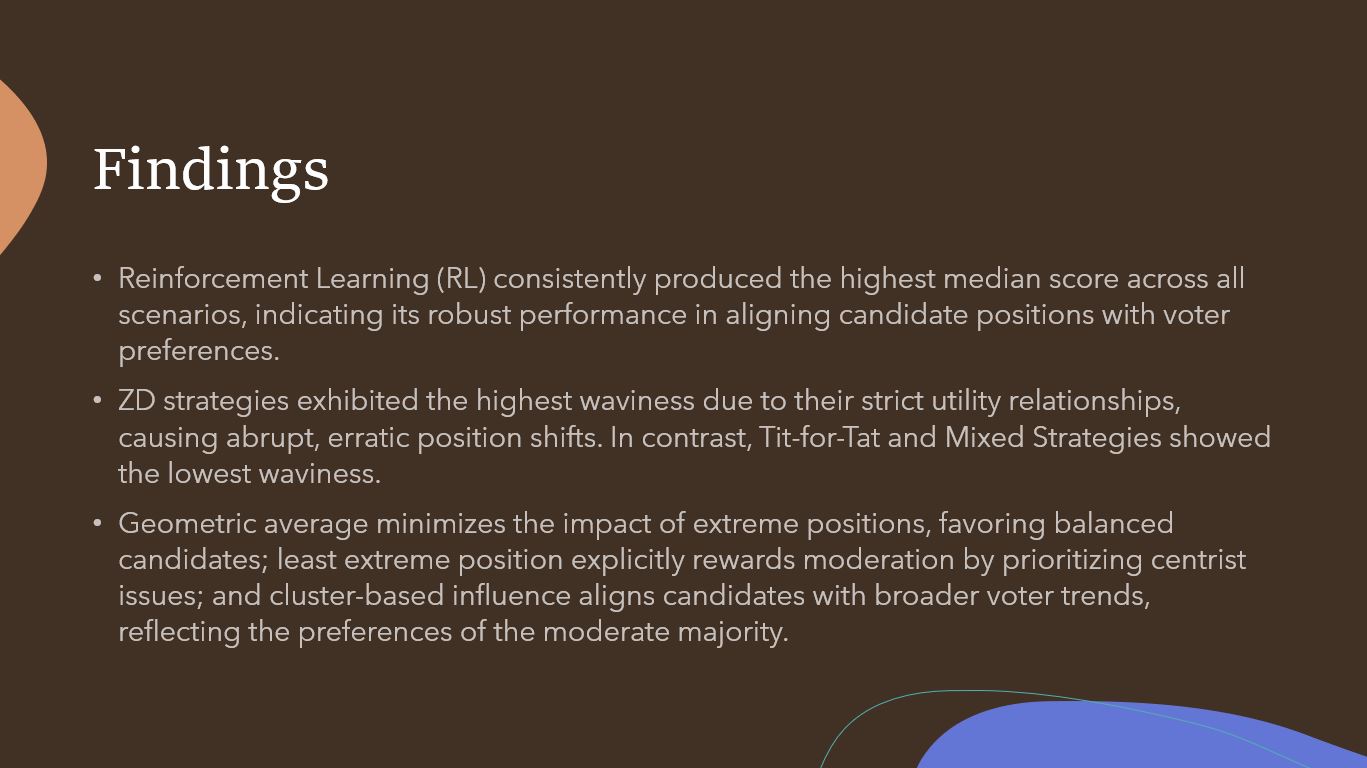 |
Findings 2. We note that reinforcement learning is very powerful in learning and addressing voter issues effectively without becoming extreme. Similarly, least extreme voter positions allow for candidates to be more successful and have more slower movement to capture more voters. |
| ICACT20250217 Slide.15
[Big Slide]
[YouTube] |
Chrome Click!! |
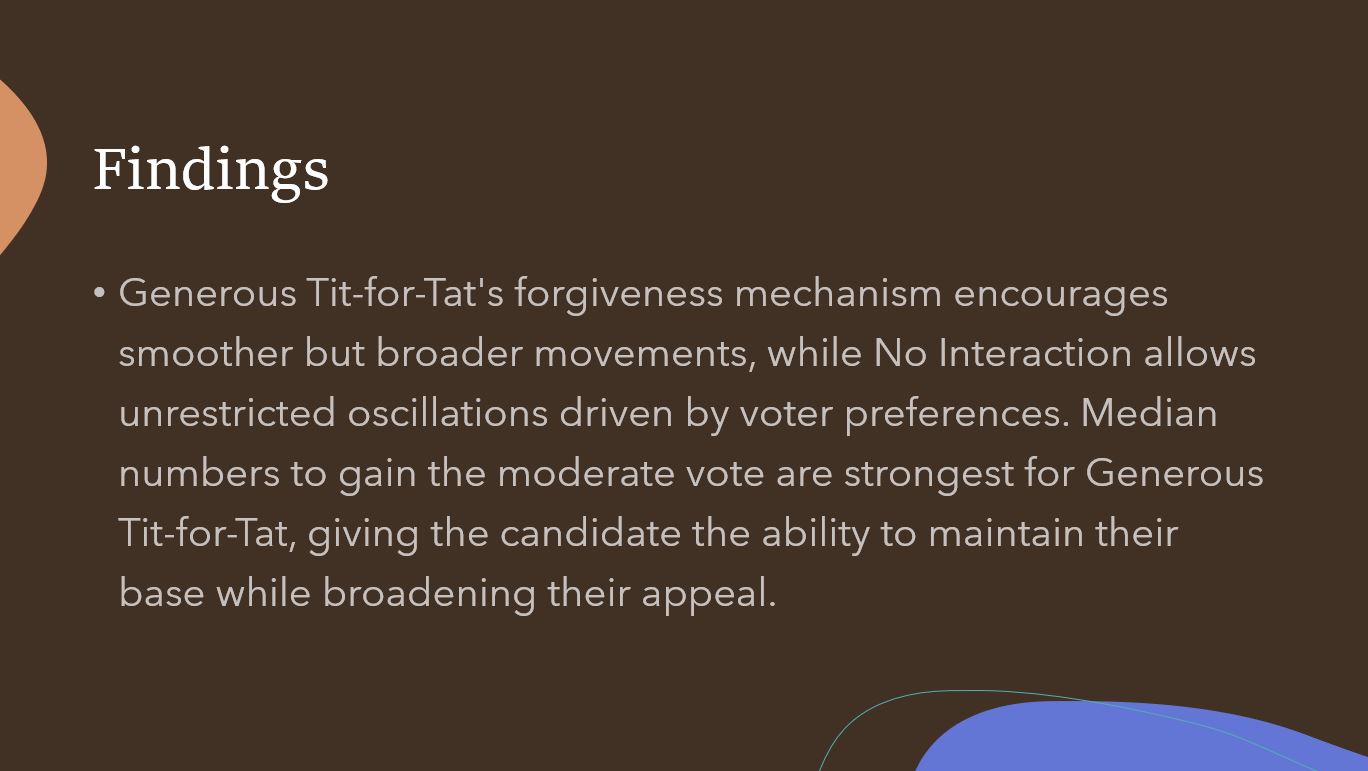 |
Findings 3. We note that smooth movements from generous tit for tat allow candidates the ability to gain more data and can therefore be viewed as an optimal approach. |
| ICACT20250217 Slide.16
[Big Slide]
[YouTube] |
Chrome Click!! |
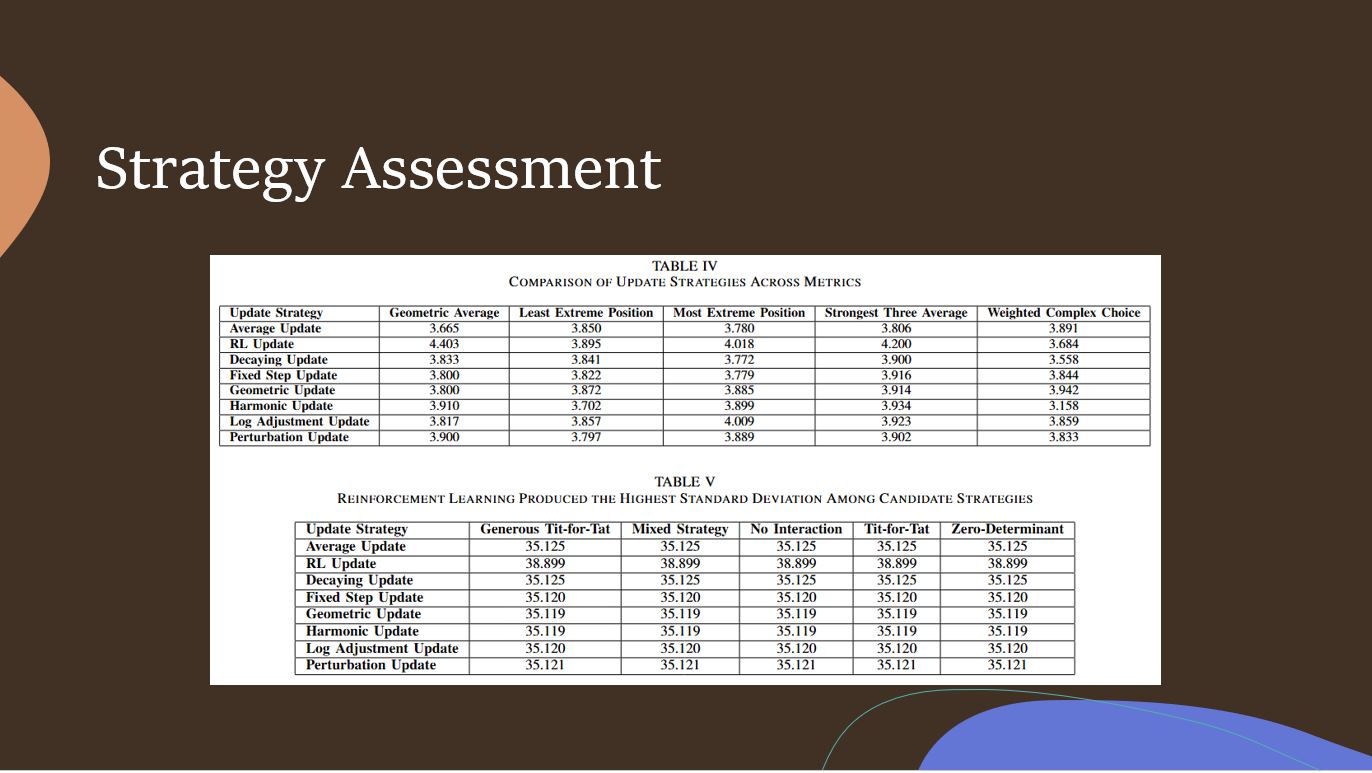 |
Strategy Assessment. Here we list all the outputs showing the numbers of what was and was not successful and how the variables were measured. |
| ICACT20250217 Slide.17
[Big Slide]
|
Chrome Click!! |
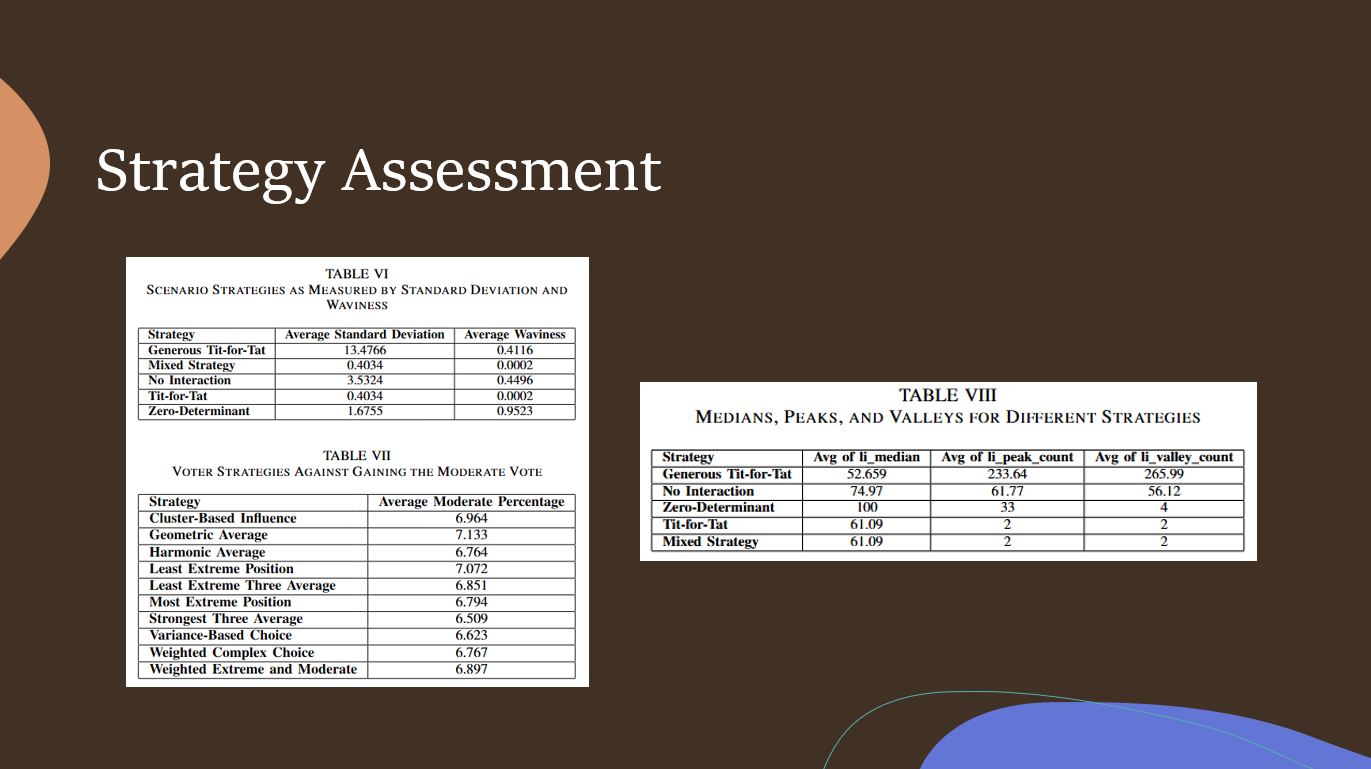 |
This is more data about what was found, showing variability as well as waviness of game theoretic strategies. |
| ICACT20250217 Slide.18
[Big Slide]
|
Chrome Click!! |
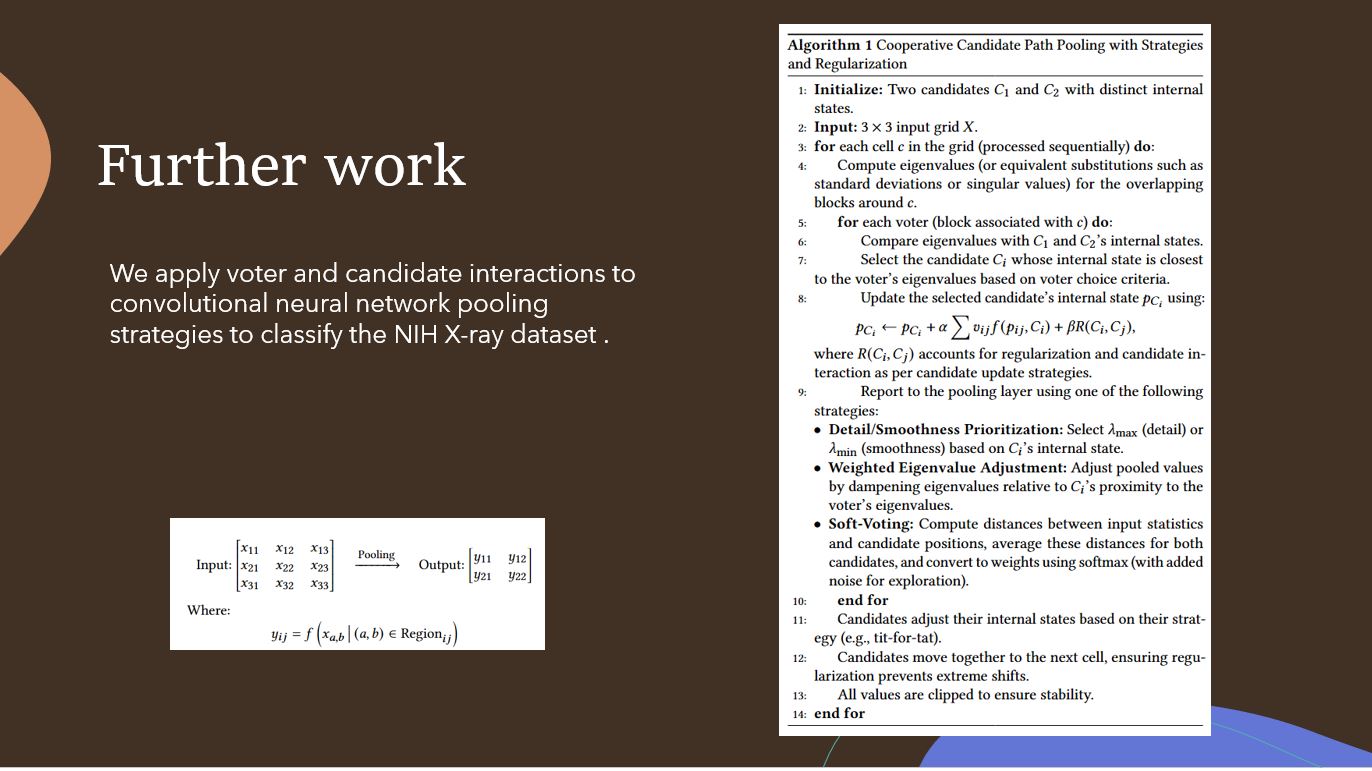 |
Further work. Here we discuss models we have built from these game theoretic ideas. For instance, we have a paper that uses these ideas for CNNs to create an adaptive pooling method. |
| ICACT20250217 Slide.19
[Big Slide]
[YouTube] |
Chrome Click!! |
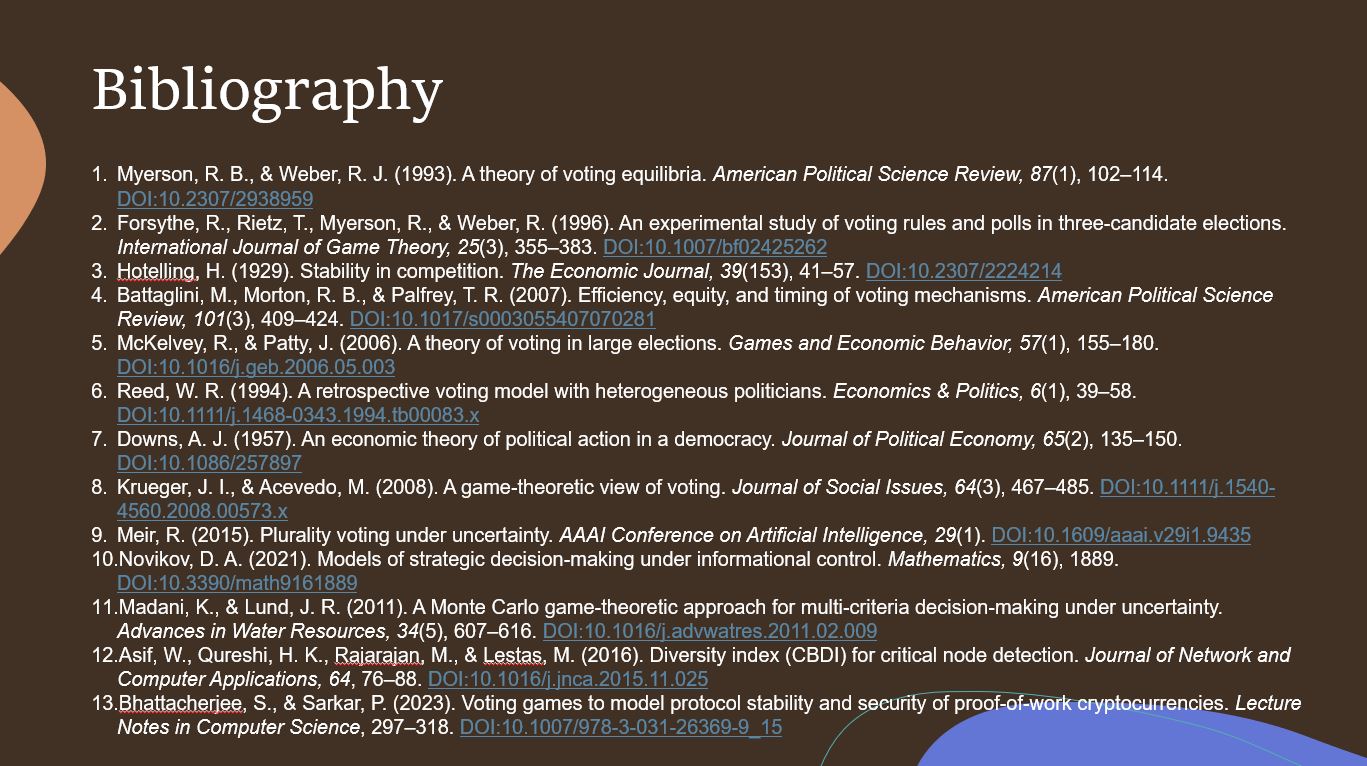 |
Bibliography. This is some major references from our work. |
| ICACT20250217 Slide.20
[Big Slide]
[YouTube] |
Chrome Click!! |
 |
Thank you and questions. Here we take questions if there are any and summarize our results. |















