Now 6382 visitors
Today:0 Yesterday:0
Total: 153282
216S 51P 5R
2026-10-22, Week 43 |
| Member Login |
| TACT Journal Homepage |
| Call for Paper |
| Committee |
| Find My Paper |
| Author Homepage |
| Statistics & History |
| Welcome Message |
| Paper Procedure |
| FAQ |
| Paper Archives |
| Outstanding Papers |
| Author Homepage |
| - Paper Procedure |
| - Journal Procedure |
| - Presentation Tips |
|
| Program & Proceedings |
| Program with Papers |
| Plenary Session |
| Tutorial Session |
|
| Presentation Platform |
| Hotel & Travel Info |
| About Korea |
| Accommodation |
| Transportation |
| VISA |
| Other Infomation |
|
| Photo Gallery |
| Scheduler Login |
| Seminar |
| Archives Login |
|
| Sponsors |

|

|

|

|

|

|

|

|

|

|
|
|
|
|
 ICACT20250229 Slide.01
[Big Slide] |
Chrome  Click!! |
 |
Good morning, everyone. My name is Zhen Wang, and today I will present our work titled 'Radar Pulse Repetition Interval Estimation based on Blind Source Separation'. This research was conducted by myself, along with my colleagues Peng Gong and Bozhi Wang, from Xi'an Institute of Electromechanical Information Technology and Beijing Institute of Technology. Thank you for being here.
|
| ICACT20250229 Slide.02
[Big Slide]
|
Chrome Click!! |
 |
"Let me briefly outline the structure of my presentation. First, I will introduce the background and challenges of PRI estimation. Then, I will discuss the mathematical models of PRI and blind source separation. After that, I will present our proposed method for PRI estimation. Next, I will show the experimental results and analysis. Finally, I will conclude with the key findings and future work.
|
| ICACT20250229 Slide.03
[Big Slide]
|
Chrome Click!! |
 |
Pulse Repetition Interval, or PRI, is a critical parameter in radar systems. It represents the time interval between two consecutive pulses emitted by the same radar. PRI reflects the radar's working mode, its application, and even its threat level. However, in complex electromagnetic environments, estimating PRI parameters becomes challenging due to two main factors: First, modern radars use various PRI modulation styles, making PRI parameter changes complicated. Second, the high density of radiation sources causes radar signals to alias, leading to false signal interference
|
| ICACT20250229 Slide.04
[Big Slide]
|
Chrome Click!! |
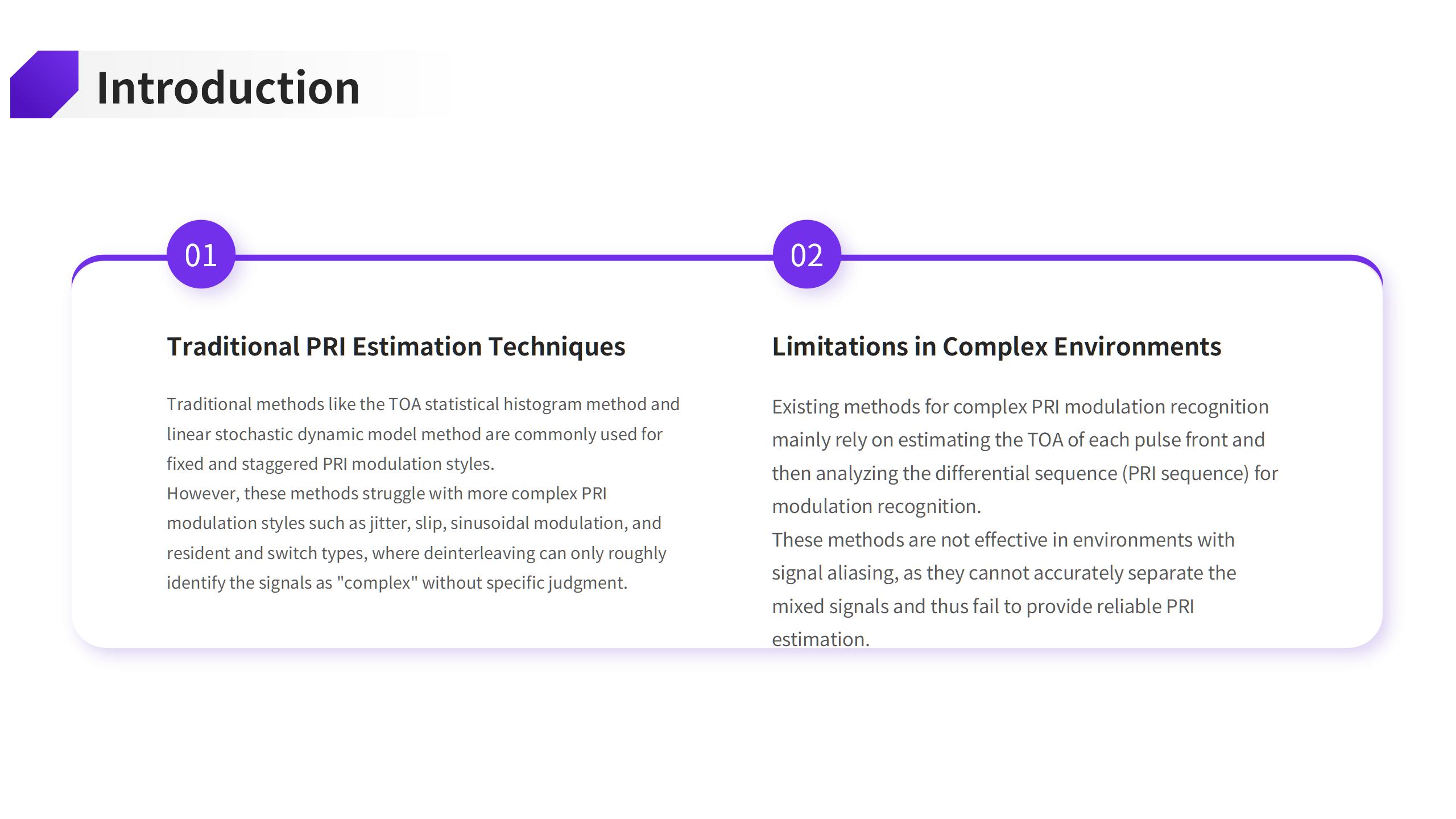 |
Existing methods for PRI estimation, such as the TOA statistical histogram method and Hough transform, work well for fixed or staggered PRI modulation. However, they struggle with complex PRI modulations like jitter, slip, or sinusoidal modulation. To address these challenges, we propose a novel PRI estimation method based on blind source separation, which effectively isolates single radar signals from aliased signals in complex environments.
|
| ICACT20250229 Slide.05
[Big Slide]
|
Chrome Click!! |
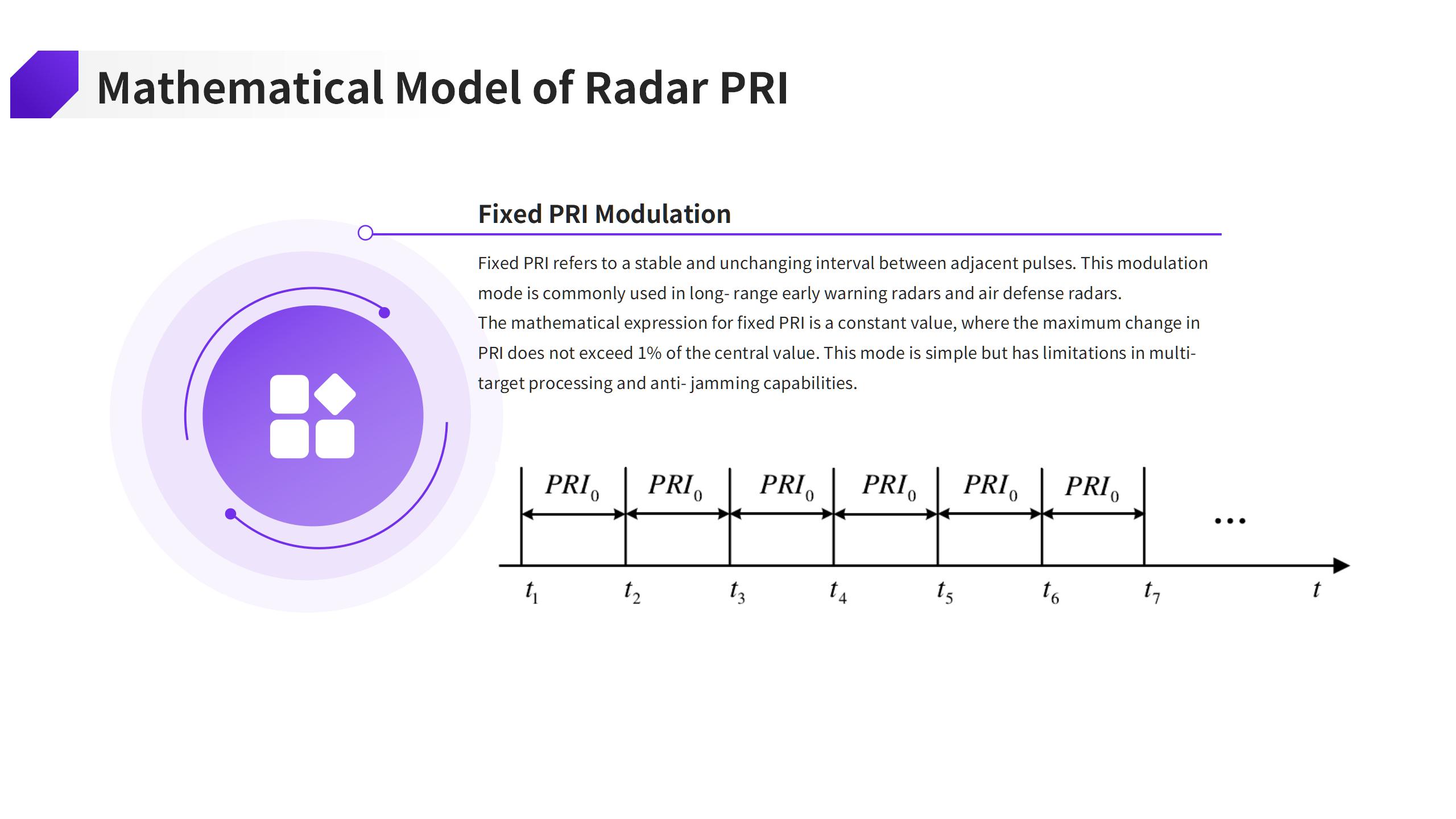 |
Let’s now discuss the mathematical models of PRI. First, we have fixed PRI, where the interval between adjacent pulses remains constant. The mathematical expression for fixed PRI is given by Equation 1: PRI_i ≡ PRI_0, where PRI_0 is a constant value. Fixed PRI is commonly used in early warning radars and MTI radars, but it has limitations in multi-target processing and anti-jamming capabilities.
|
| ICACT20250229 Slide.06
[Big Slide]
|
Chrome Click!! |
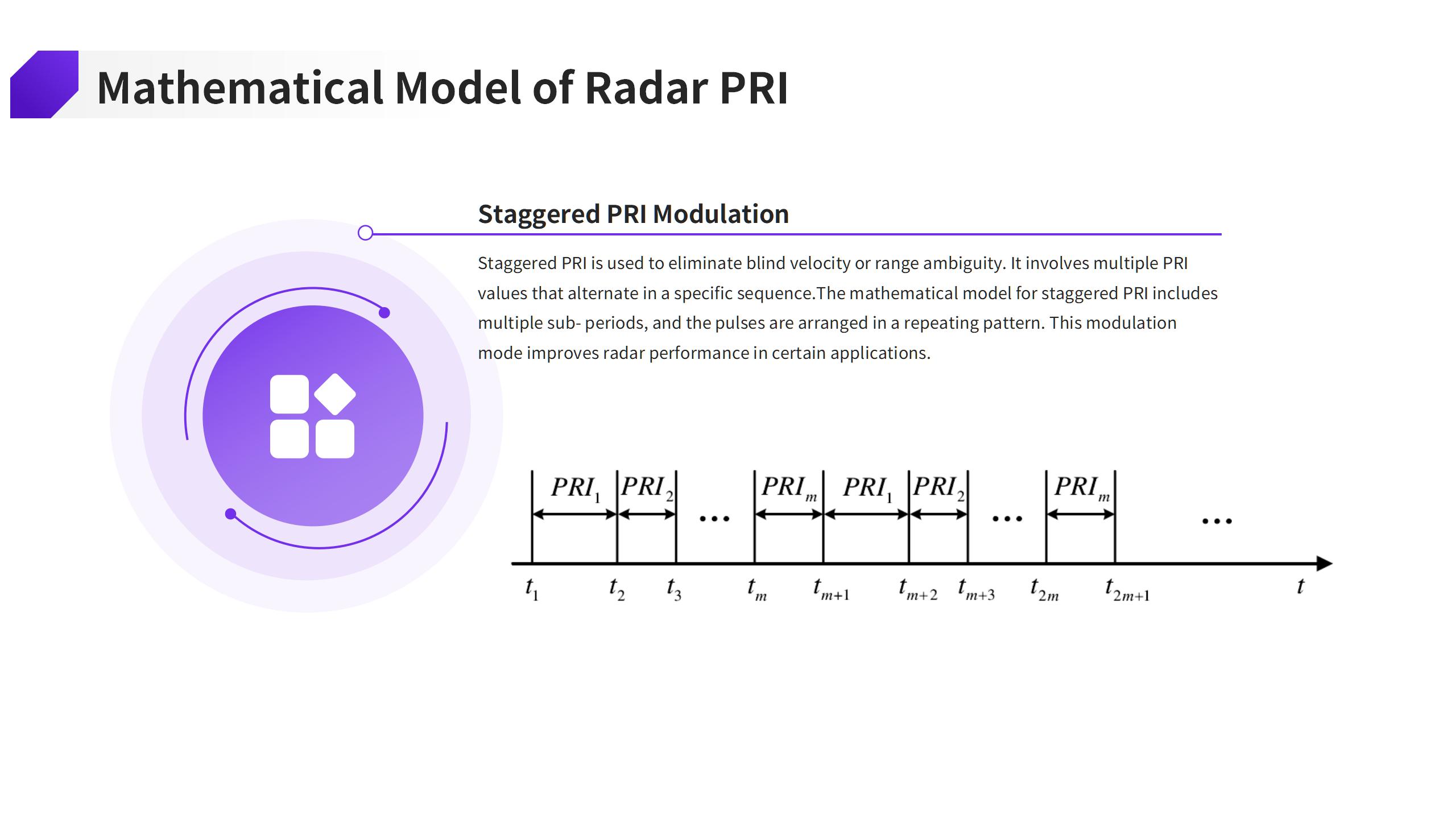 |
Next, we have staggered PRI, which is used to eliminate blind velocity or range ambiguity. In this modulation, the pulse sequence is interleaved with multiple PRI values. The mathematical expression is given by Equation 2: PRI_i = PRI_k, where k = i mod m. Here, m represents the number of subperiods, and the PRI values cycle through these subperiods.
|
| ICACT20250229 Slide.07
[Big Slide]
|
Chrome Click!! |
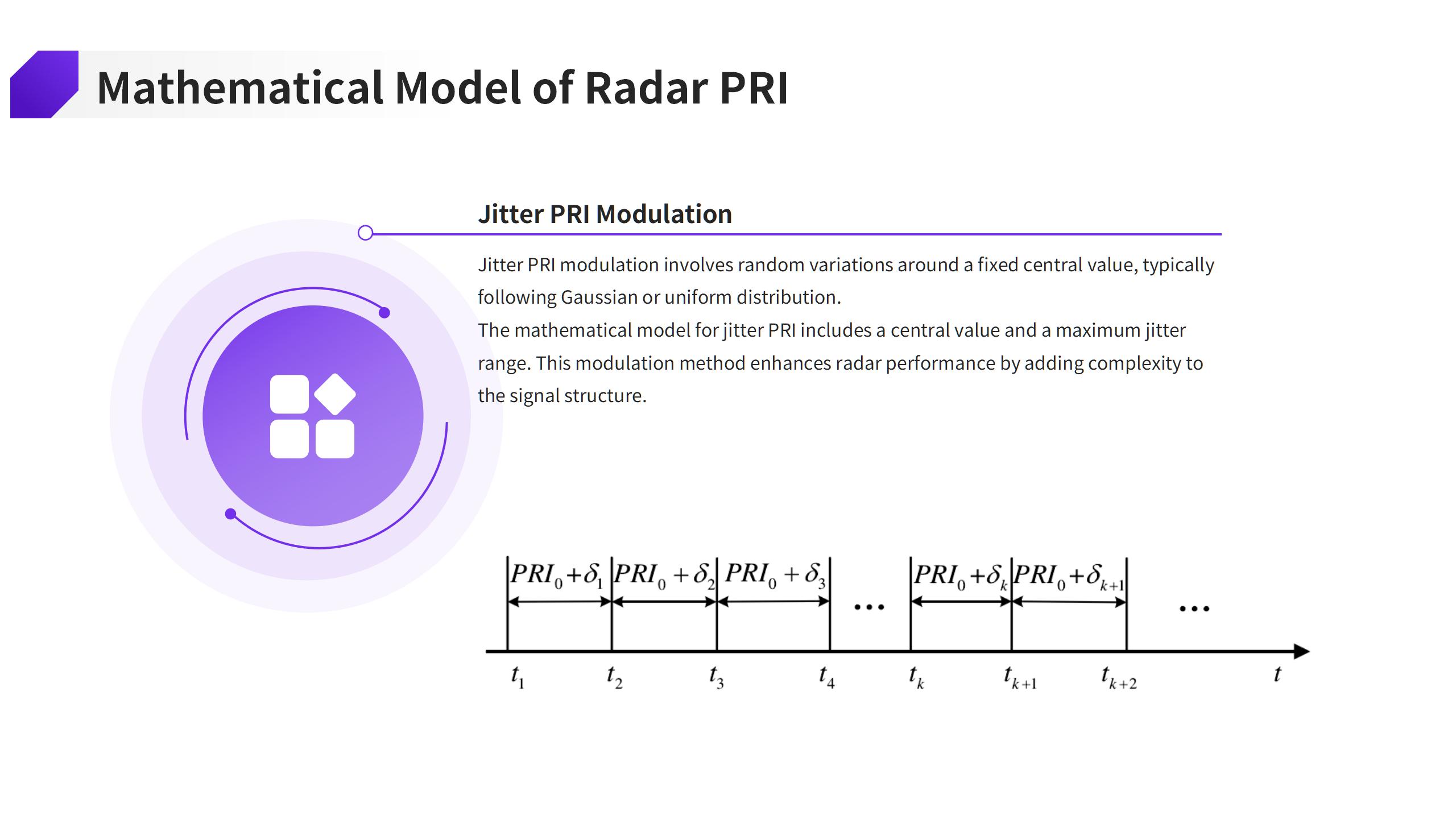 |
Finally, we have jitter PRI, where the PRI varies randomly around a fixed value. The mathematical model is given by Equation 3: PRI_i = PRI_0 + δ_i, where δ_i represents the jitter amount, typically following a Gaussian or uniform distribution. Jitter PRI is often used to enhance anti-jamming capabilities.
|
| ICACT20250229 Slide.08
[Big Slide]
|
Chrome Click!! |
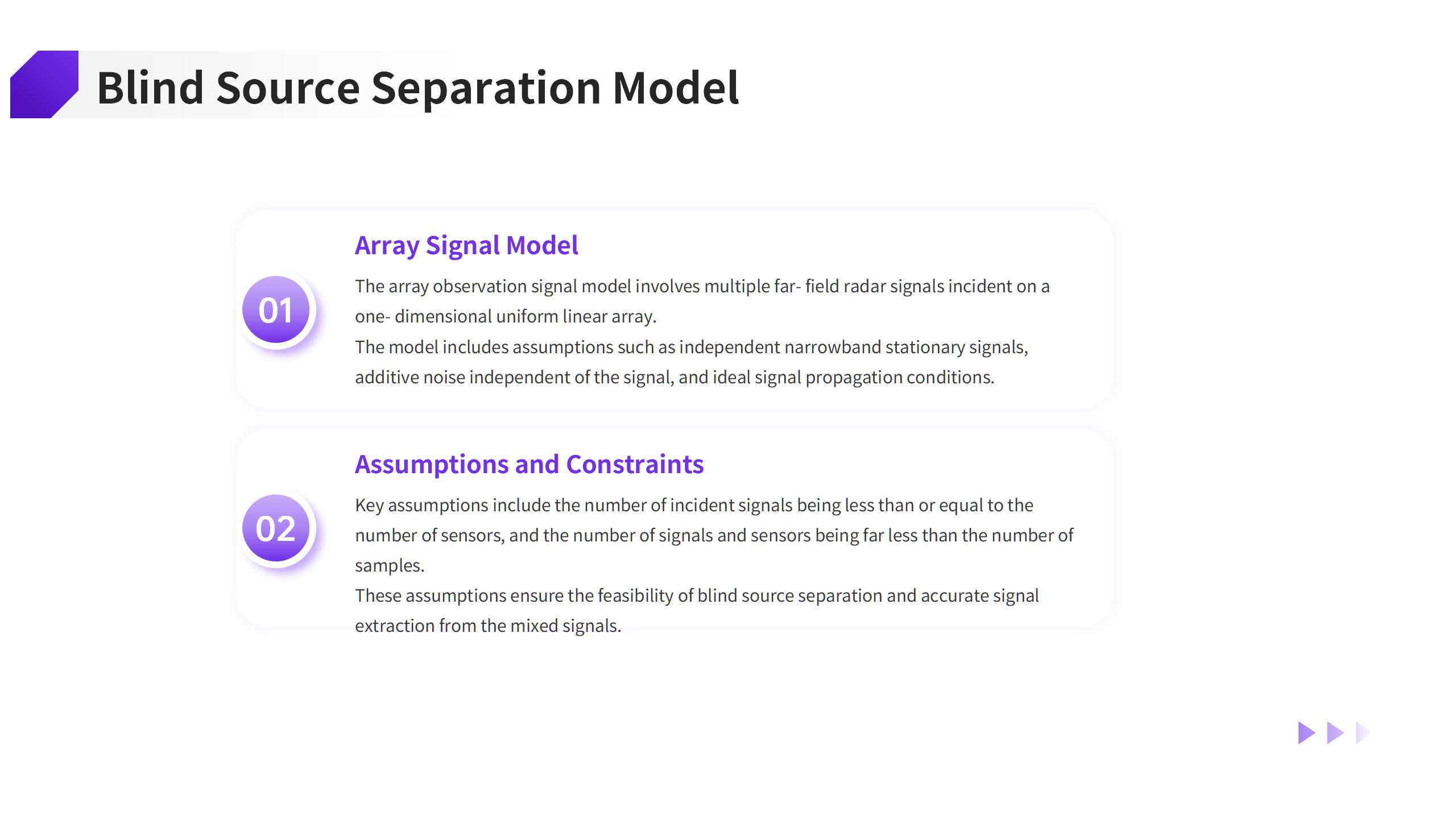 |
Now, let’s move on to the mathematical model of blind source separation. Suppose K far-field radar signals are incident on a one-dimensional uniform linear array composed of M sensors. The array observation signal at time t is given by Equation 5: X(t) = A(θ)s(t) + w(t), where A(θ) is the direction matrix, s(t) is the signal vector, and w(t) is the noise vector.
|
| ICACT20250229 Slide.09
[Big Slide]
|
Chrome Click!! |
 |
The key assumptions of this model are: First, the incident signals are independent narrowband stationary signals. Second, the additive noise is independent of the signal. Third, the number of incident signals is less than or equal to the number of sensors. Finally, the signal propagates in an ideal space, and the sensors have omnidirectional consistency.
|
| ICACT20250229 Slide.10
[Big Slide]
|
Chrome Click!! |
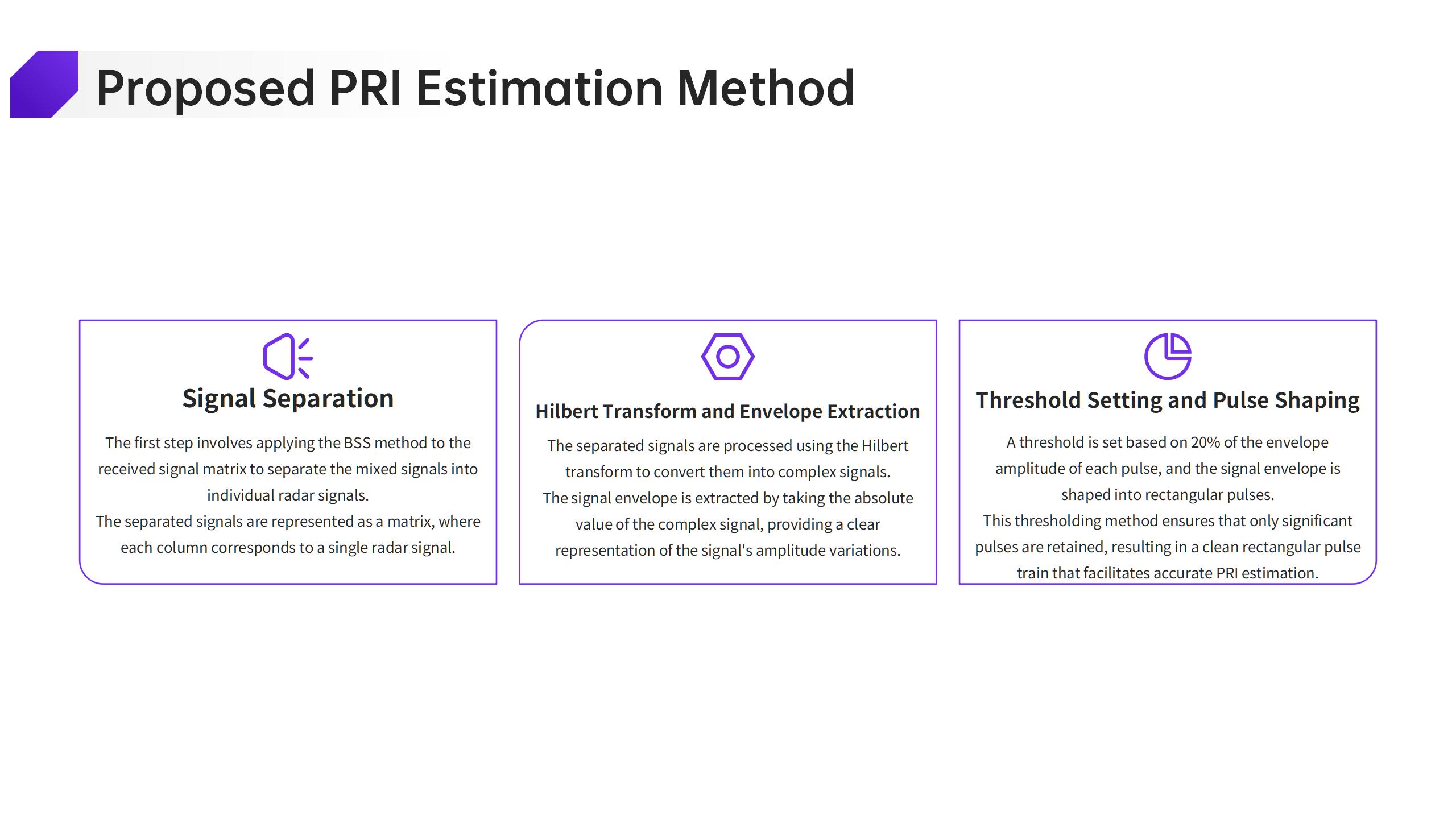 |
Our proposed PRI estimation method consists of several key steps. First, we use blind source separation to separate the mixed signals received by a one-dimensional uniform linear antenna array. Then, we apply the Hilbert transform to extract the signal envelope. Next, we shape the envelope into a rectangular pulse train using a floating threshold. Finally, we estimate the pulse arrival and end times to calculate the PRI.
|
| ICACT20250229 Slide.11
[Big Slide]
|
Chrome Click!! |
 |
All five radar emitter signals adopt the interpulse modulation style of PRI jagged jitter. The PRI jagged dither radar signal is formed by adding a dither quantity to the PRI jagged signal. There are four reference PRI values in each cycle, which are 100 μs,120 μs,140 μs,180 μs, respectively, and the jitter percentage of each PRI is 5%. The reference value plus the jitter amount forms the actual PRI value of the radar signal.
The intra-pulse modulation methods of radar signal are two-phase coding (BPSK), single frequency point (CW), linear frequency modulation (LFM), polyphase coding (MPSK) and nonlinear frequency modulation (NLFM), and their parameters are as follows:
|
| ICACT20250229 Slide.12
[Big Slide]
|
Chrome Click!! |
 |
BPSK: pulse width is 10/31 mu s, encoding for [0,0,1,1,1,0,1,1,0,1,1,0,1,0,1,0,1,0,0,0,0,0,0,1,1,1,0,0,1,1,0], the initial phase of 0, the signal carrier frequency of 30 MHz.
CW: The pulse width is 20 μs, the carrier frequency is 30MHz, and the initial phase is 0.
LFM: The pulse width is 20 μs, the bandwidth is 10MHz, the starting frequency is 30 MHz, and the initial phase is 0.
MPSK: The subpulse width is 0.4 μs, Franck coding is used, the number of code elements is 5, the carrier frequency is 30 MHz, and the initial phase is 0.
NLFM: The asymmetric NLFM signal shown on Radar Manual is used, the frequential-time function and coefficient value are the same as in the literature[12], the pulse width is 20 μs, the bandwidth is 10 MHz, the starting frequency is 30 MHz, and the initial phase is 0.
In the simulation experiment, the number of antenna array elements 𝑀=5, the number of radars 𝐾=5, the signal amplitude is 1, the sampling frequency 𝐹𝑠=300 MHz, the number of signal sampling points 𝑁=605999, the signal-to-noise ratio of the observation signal after adding noise is 30 dB, and the blind source separation method adopts the SOBI method.
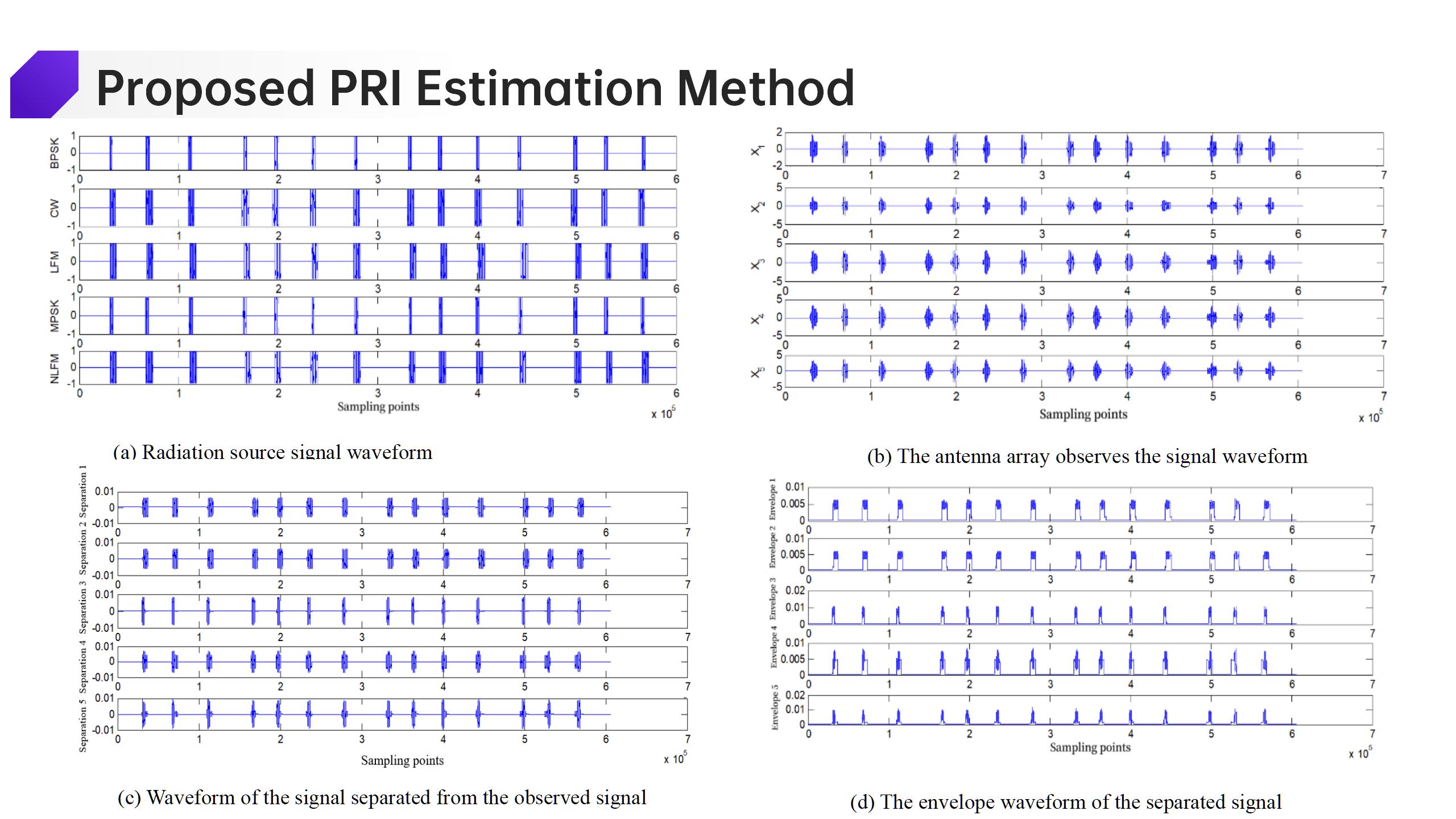
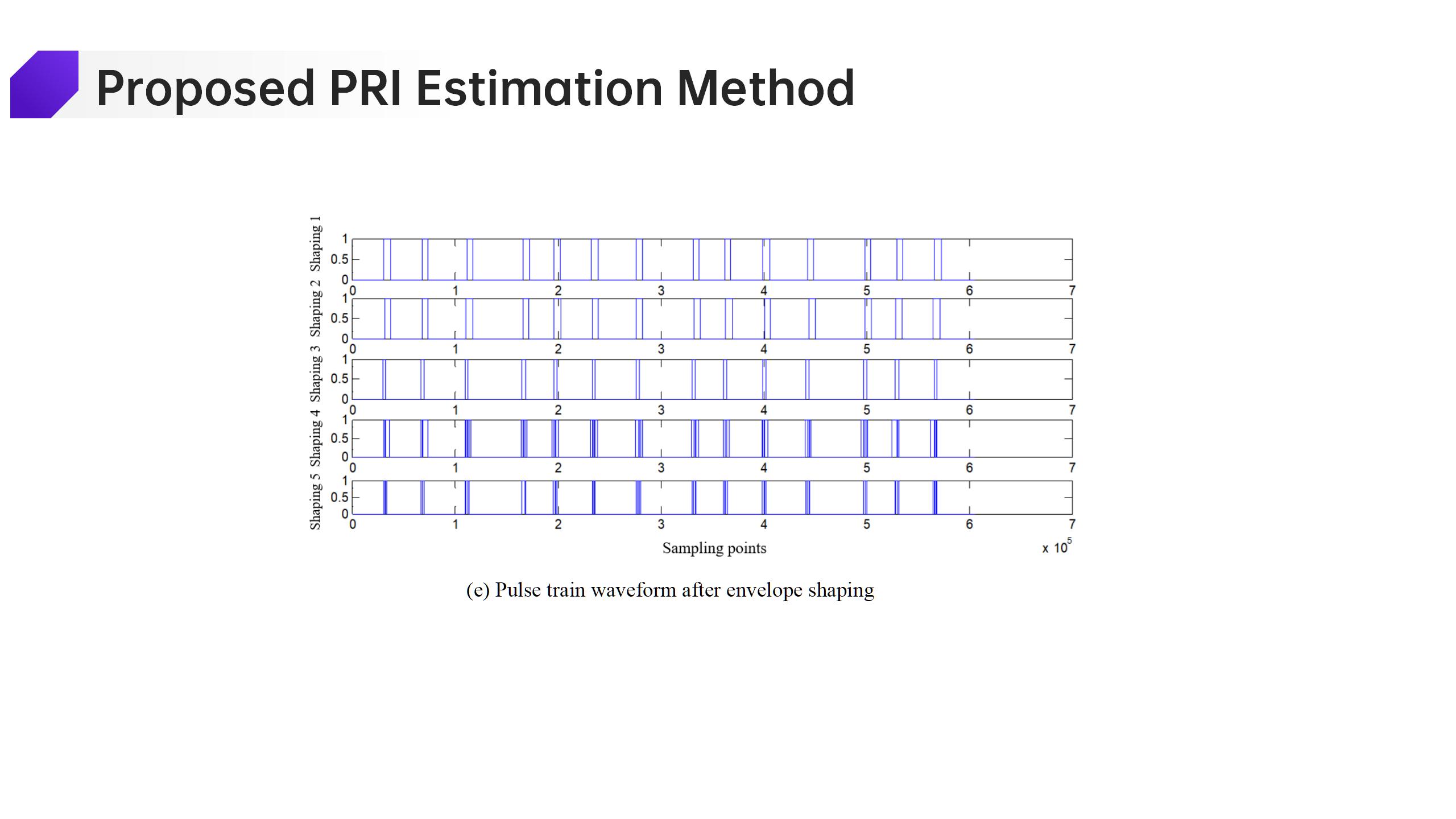
The waveform of each key link signal is shown in Figure 4. The similarity coefficients of the separated signals and radar emitter signals are shown in Table 1. The PRI parameters of the five radar emitter signals and the PRI parameter results calculated by separating the five signals are shown in Figure 5.
|
| ICACT20250229 Slide.13
[Big Slide]
|
Chrome Click!! |
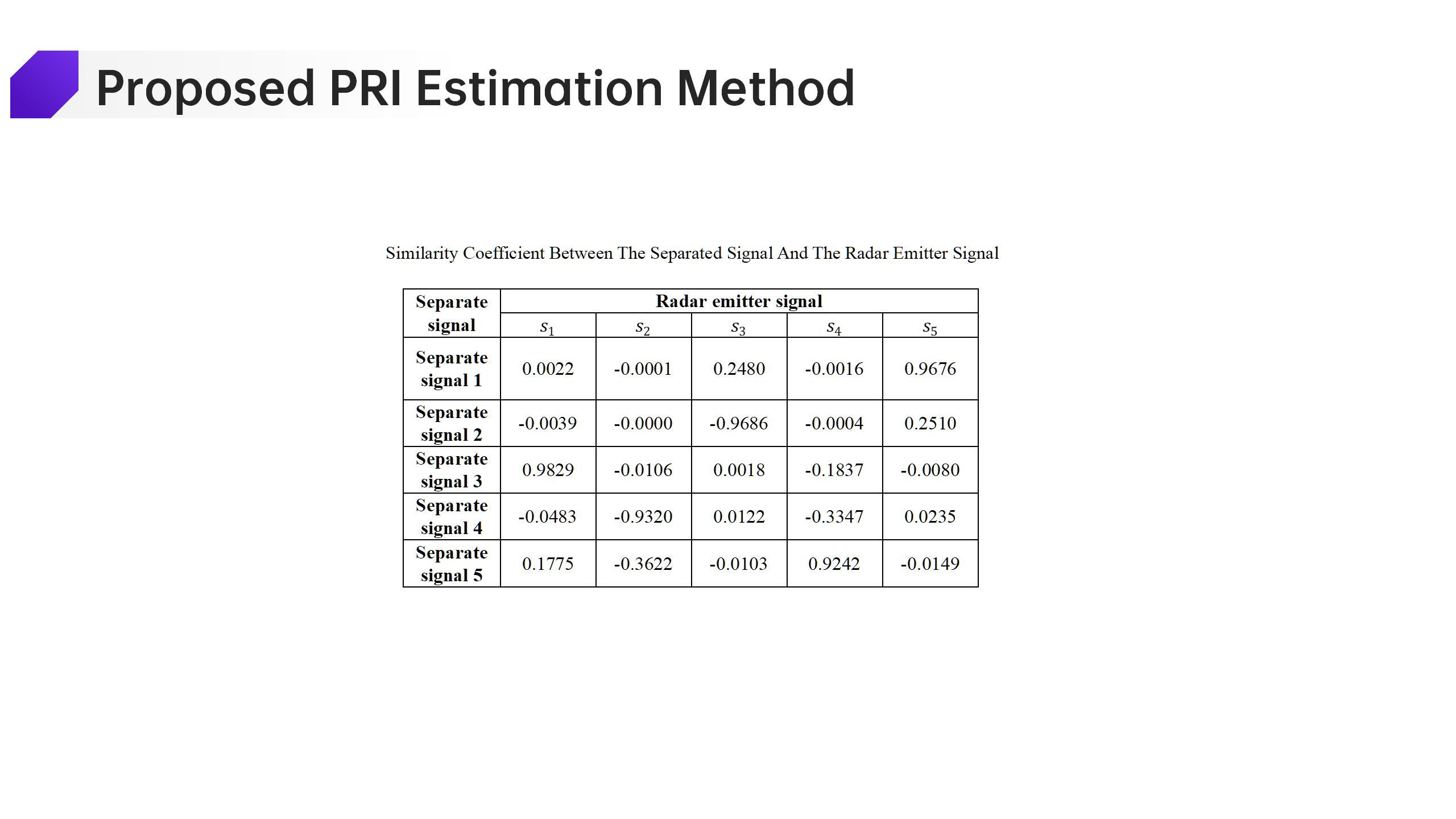 |
In Table 1, the underlined values represent the similarity coefficients between separated signals and radar emitter signals. The coefficient's sign does not impact the signal information; only its absolute value matters, with values closer to 1 indicating better results. The table shows high similarity between separated signals and their corresponding radar emitter signals, such as 0.9676 for separation signal 1 and the fifth emitter, -0.9686 for signal 2 and the third emitter, and 0.9829 for signal 3 and the first emitter, demonstrating excellent separation performance.
|
| ICACT20250229 Slide.14
[Big Slide]
|
Chrome Click!! |
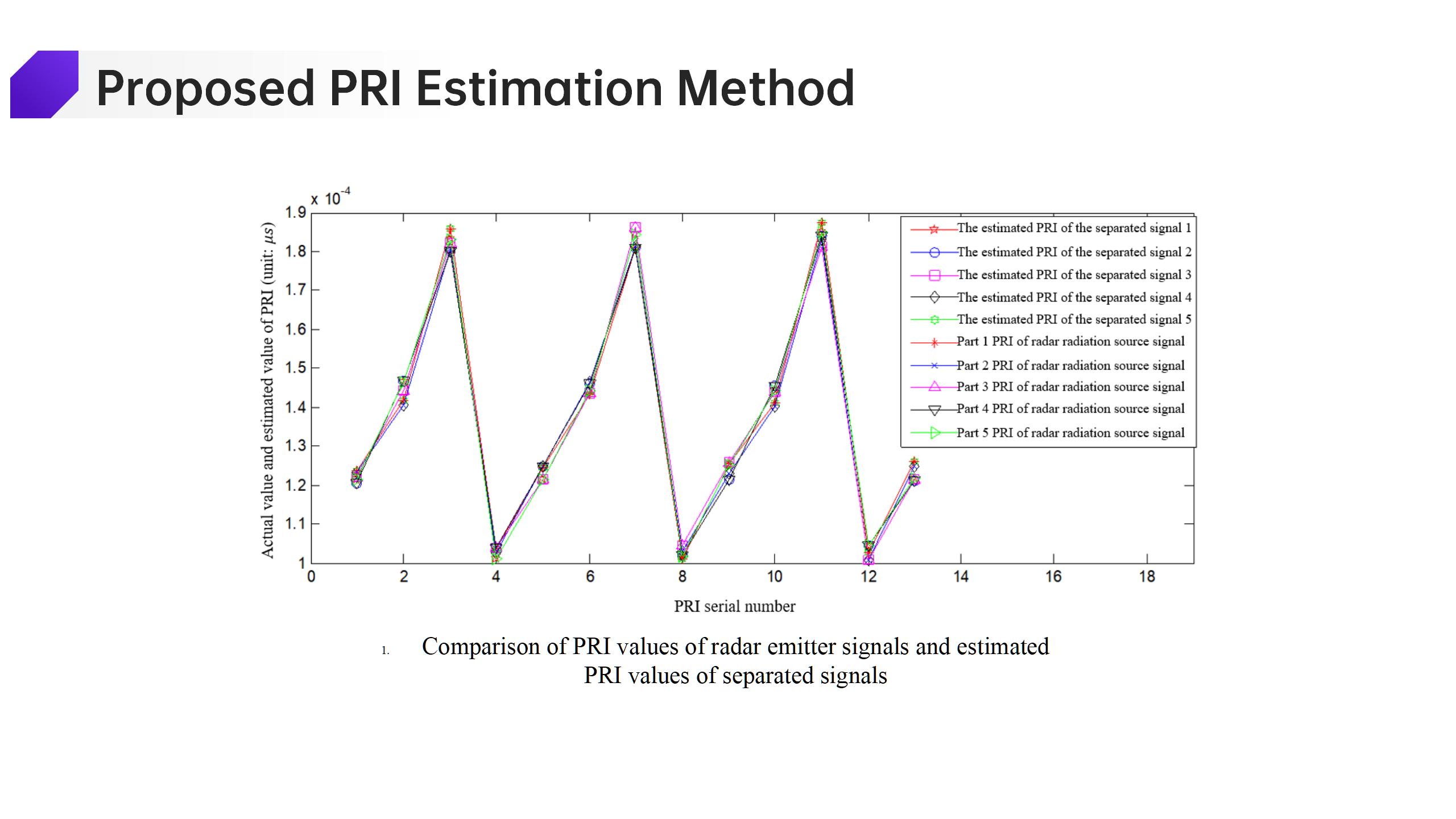 |
As can be seen from Figure 5, after the processing steps of the proposed method, the PRI value estimated from the separated signals is very close to the real PRI value of the radar emitter signal, which can prove the effectiveness of the proposed method.
|
| ICACT20250229 Slide.15
[Big Slide]
|
Chrome Click!! |
 |
Let me briefly highlight the key signal waveforms from our experiments. First, we observed the original radar emitter signals, which were highly aliased due to the complex electromagnetic environment. After applying blind source separation, we obtained clean, isolated signals corresponding to individual radar emitters. Next, we extracted the signal envelopes using the Hilbert transform and applied our floating threshold method to shape the envelopes into rectangular pulse trains. These pulse trains exhibited sharp rising and falling edges, which are crucial for accurately determining pulse arrival and end times. Finally, we used these pulse trains to calculate the PRI values, which closely matched the true values.
|
| ICACT20250229 Slide.16
[Big Slide]
|
Chrome Click!! |
 |
The experimental results demonstrate the effectiveness of our method. Using the SOBI algorithm for blind source separation, we successfully separated five radar signals with different PRI modulations. The similarity coefficients between the separated signals and the original radar emitter signals exceeded 0.999, indicating excellent separation performance. Furthermore, the estimated PRI values closely matched the true PRI values, with minimal deviation. This confirms that our method can accurately estimate PRI parameters in complex environments, overcoming the challenges posed by signal aliasing
|
| ICACT20250229 Slide.17
[Big Slide]
|
Chrome Click!! |
 |
Our proposed method addresses the critical challenge of signal aliasing in complex electromagnetic environments. By employing blind source separation (BSS), we effectively isolate single radar signals from aliased signals received by a one-dimensional uniform antenna array. This separation allows us to accurately estimate the Pulse Repetition Interval (PRI). Additionally, our innovative waveform shaping method, based on the floating threshold of the Hilbert envelope, generates a rectangular pulse train that enables precise extraction of pulse arrival and end times. This approach significantly improves the accuracy of PRI estimation, even in environments with high pulse density and complex PRI modulations.
|
| ICACT20250229 Slide.18
[Big Slide]
|
Chrome Click!! |
 |
In summary, our work makes three key contributions. First, we introduced a blind source separation-based approach to isolate single radar signals from aliased environments, effectively addressing the challenge of signal aliasing. Second, we proposed an innovative waveform shaping method using the floating threshold of the Hilbert envelope, which enables precise extraction of pulse arrival and end times. Third, we demonstrated through simulations that our method achieves high accuracy in PRI estimation, with similarity coefficients exceeding 0.999 and minimal deviation from true PRI values. These contributions significantly enhance the performance of radar signal parameter estimation and identification analysis.
|
| ICACT20250229 Slide.19
[Big Slide]
|
Chrome Click!! |
 |
Looking ahead, we plan to explore several innovative directions to further improve our method. First, we aim to investigate cognitive radar waveform design, which adapts the waveform in real-time based on the environment. Second, we will explore adaptive waveform optimization techniques to enhance the robustness of our method in highly dynamic electromagnetic environments. Finally, we plan to integrate machine learning algorithms for waveform selection and parameter estimation, which could further improve the accuracy and efficiency of our approach. These future research directions will build on the strong foundation laid by our current work and open new possibilities for advanced radar signal processing.
|
| ICACT20250229 Slide.20
[Big Slide]
|
Chrome Click!! |
 |
Thank you
|
| |





