 ICACT20260305 Slide.01
[Big Slide] |
Chrome  Click!! |
 |
Hello everyone, I’m Mohsan Sheraz.
Today I’ll present our conference paper on metaverse-based auditing and inspection for healthcare and pharmaceutical supply chains.
The core idea is simple: the metaverse in supply chain is increasingly used for visibility, but audits and inspections are still episodic.
So, We propose a blueprint to make the metaverse based supply chain systems context aware audit and inspection ready.
|
| ICACT20260305 Slide.02
[Big Slide]
|
Chrome Click!! |
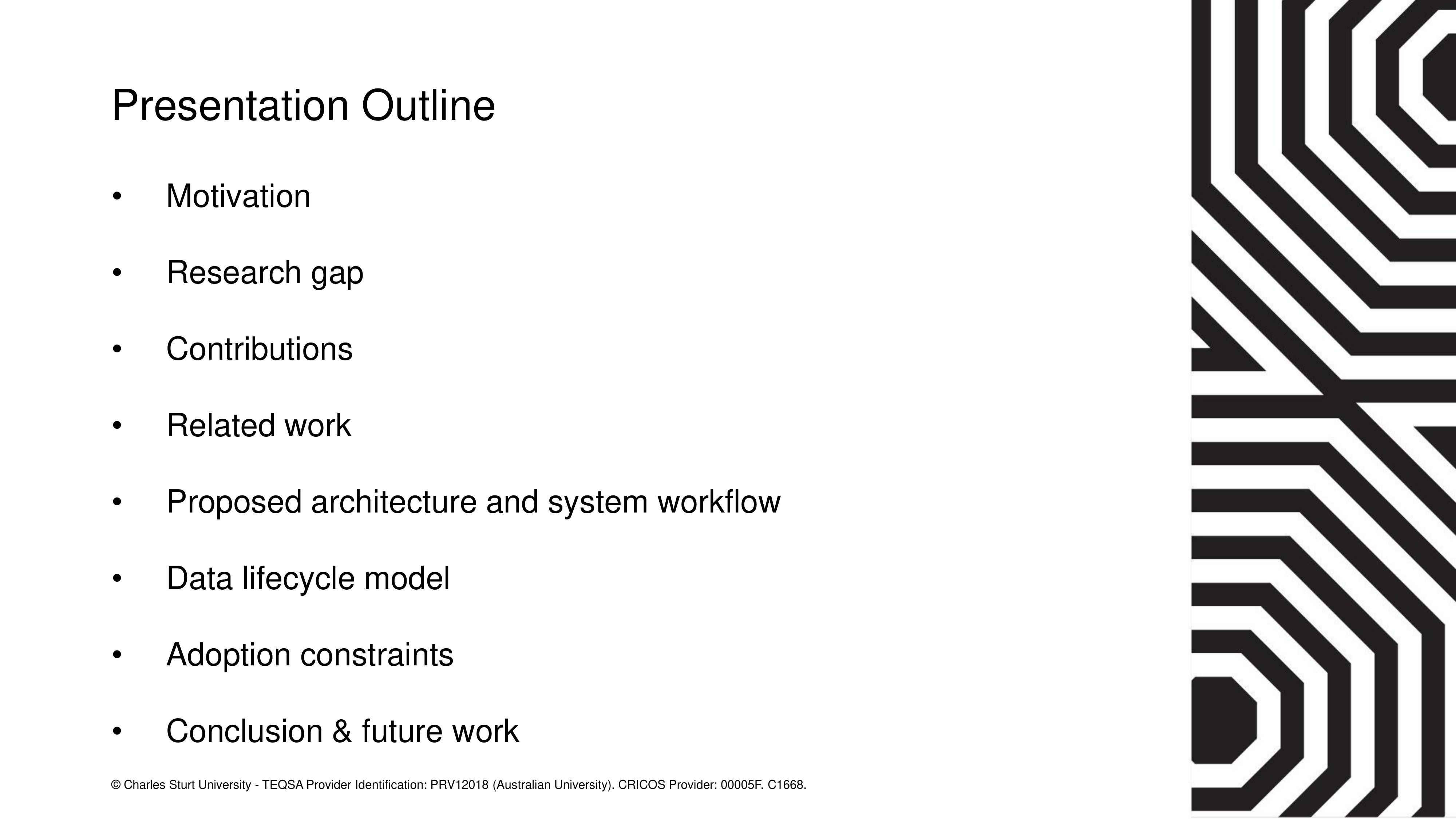 |
Here’s how the talk is structured. I’ll start with the motivation and the research gap, then summarize our contributions and briefly position them against related work. After that, I’ll explain the proposed architecture and system workflow, followed by the data lifecycle model, the collection, preprocessing, and risk assessment algorithms. Then I’ll discuss adoption constraints for real deployments, and finish with the conclusion and next steps.
|
| ICACT20260305 Slide.03
[Big Slide]
|
Chrome Click!! |
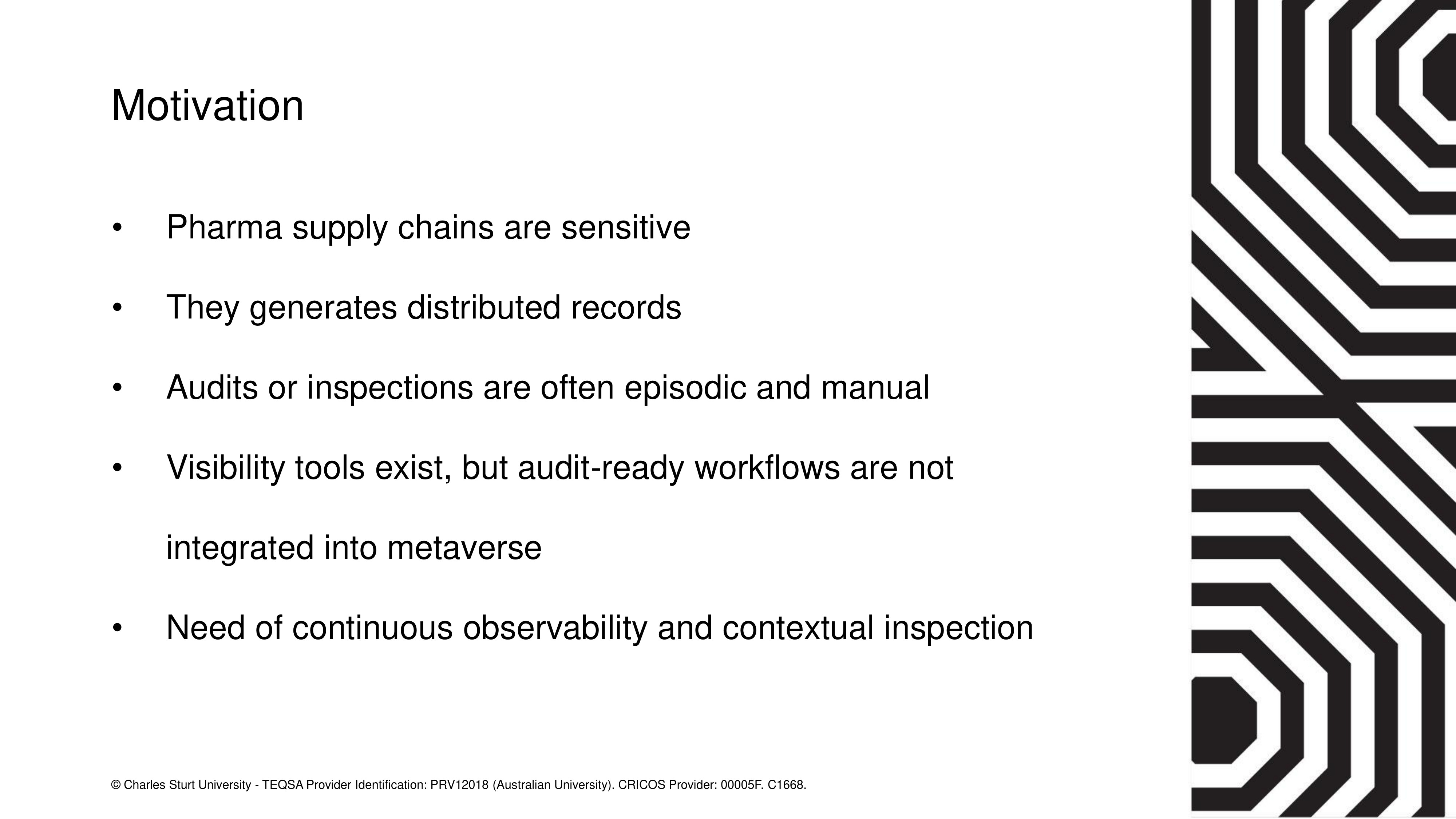 |
Pharma supply chains are sensitive and needs continues inspection and audit. It generate a lot of records, for example sensor data like temperature and humidity, logistics events, and operational records.
But auditing and inspections of these events is still largely done through the dashboards or manual when the whole supply chain is metaverse based, so there are two parallel process that leads to deviations can be discovered late.
Many metaverse systems improve visibility, but they dont provides auditing and inspection facility in existing metaverse based supply chain solutions.
Our motivation is to support continuous, and contextual oversight rather than after-the-fact reporting. Also the supply chain process should be inspected and audited in the same metaverse environment.
|
| ICACT20260305 Slide.04
[Big Slide]
|
Chrome Click!! |
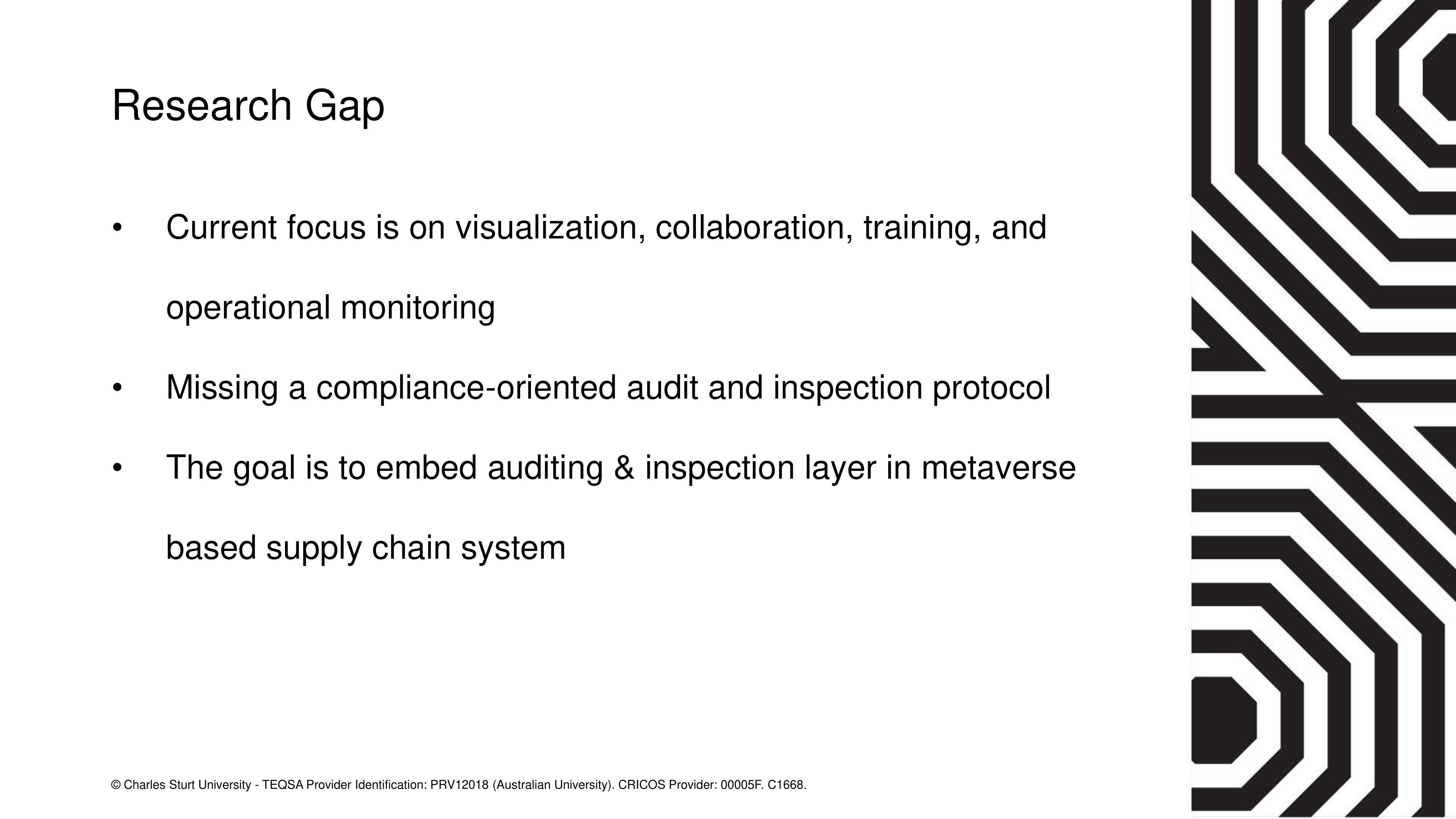 |
This leads to the research gap.
Existing metaverse based supply chain systems focus on: visualization, collaboration, training, and operational monitoring
a compliance-oriented audit and inspection protocol is missing, that could provide immersive and contextual aware auditing and inspection
The goal is to embed auditing & inspection as a first-class function in metaverse based supply chain systems
|
| ICACT20260305 Slide.05
[Big Slide]
|
Chrome Click!! |
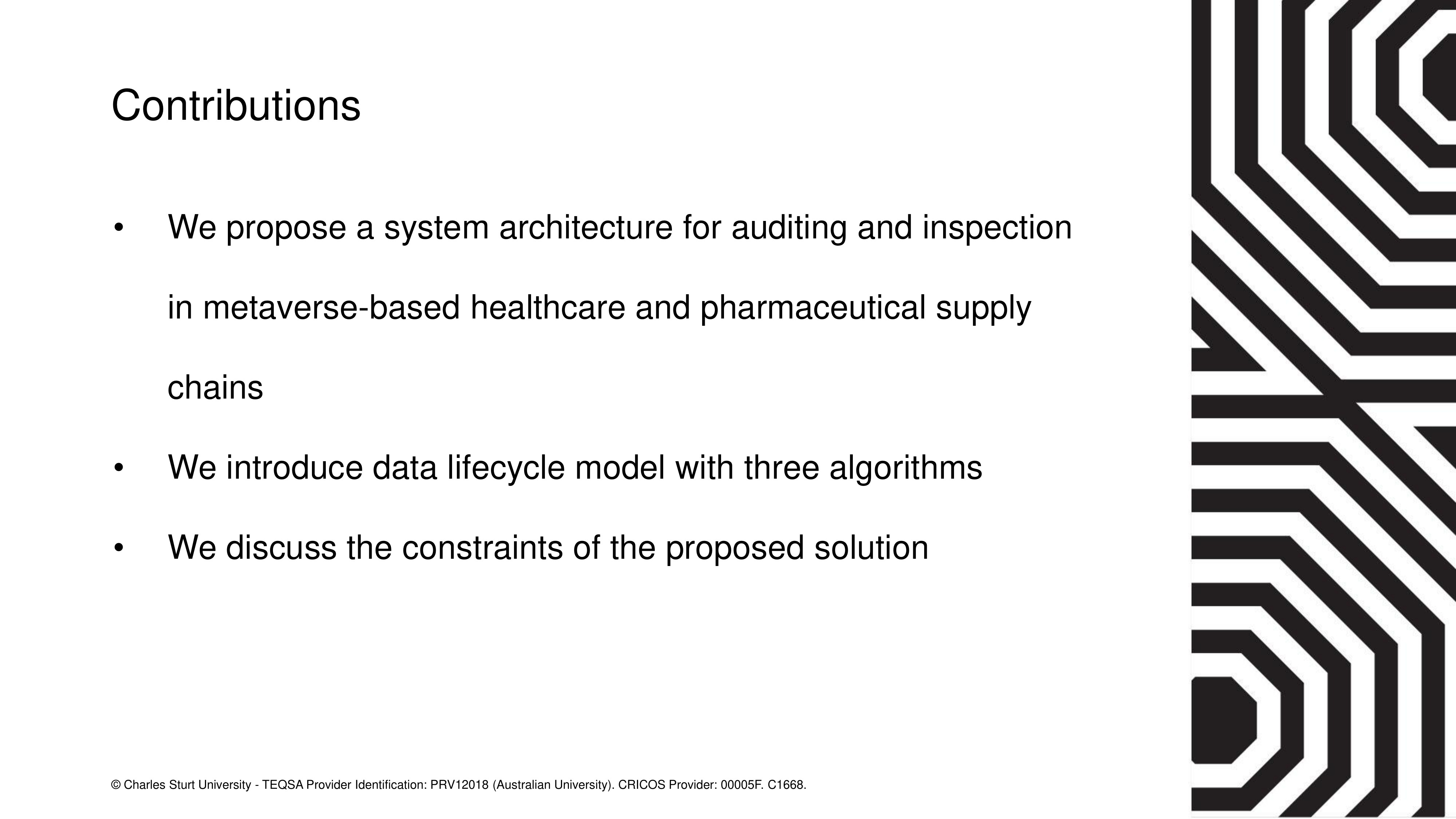 |
We make three contributions.
First, We propose a system architecture for auditing and inspection in metaverse-based healthcare and pharmaceutical supply chains
Second, we define an end-to-end workflow and a data lifecycle model with three algorithms covering collection, preprocessing, and analysis with risk assessment.
Third, we analyze key constraints, technical, regulatory, and adoption,ethical, so the proposal covers the practical deployment realities.
|
| ICACT20260305 Slide.06
[Big Slide]
|
Chrome Click!! |
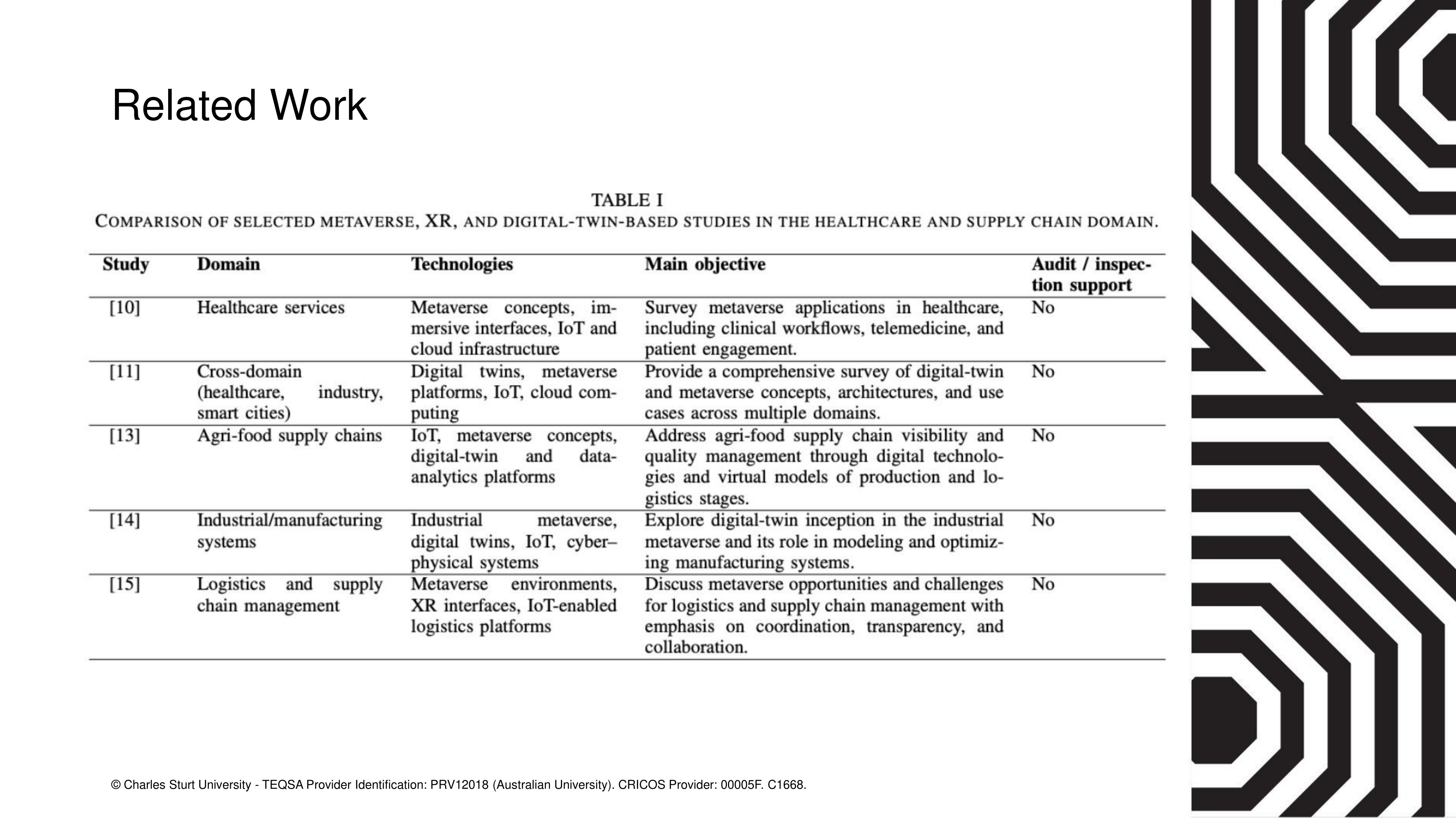 |
In related work, you’ll see a lot of studies exploring the metaverse and digital twins for healthcare and various other supply chains, but the common limitation is that audit and inspection support is missing.
Our positioning is that the metaverse should support auditing and inspection with the context of the process being audited or inspected within the metaverse.
|
| ICACT20260305 Slide.07
[Big Slide]
|
Chrome Click!! |
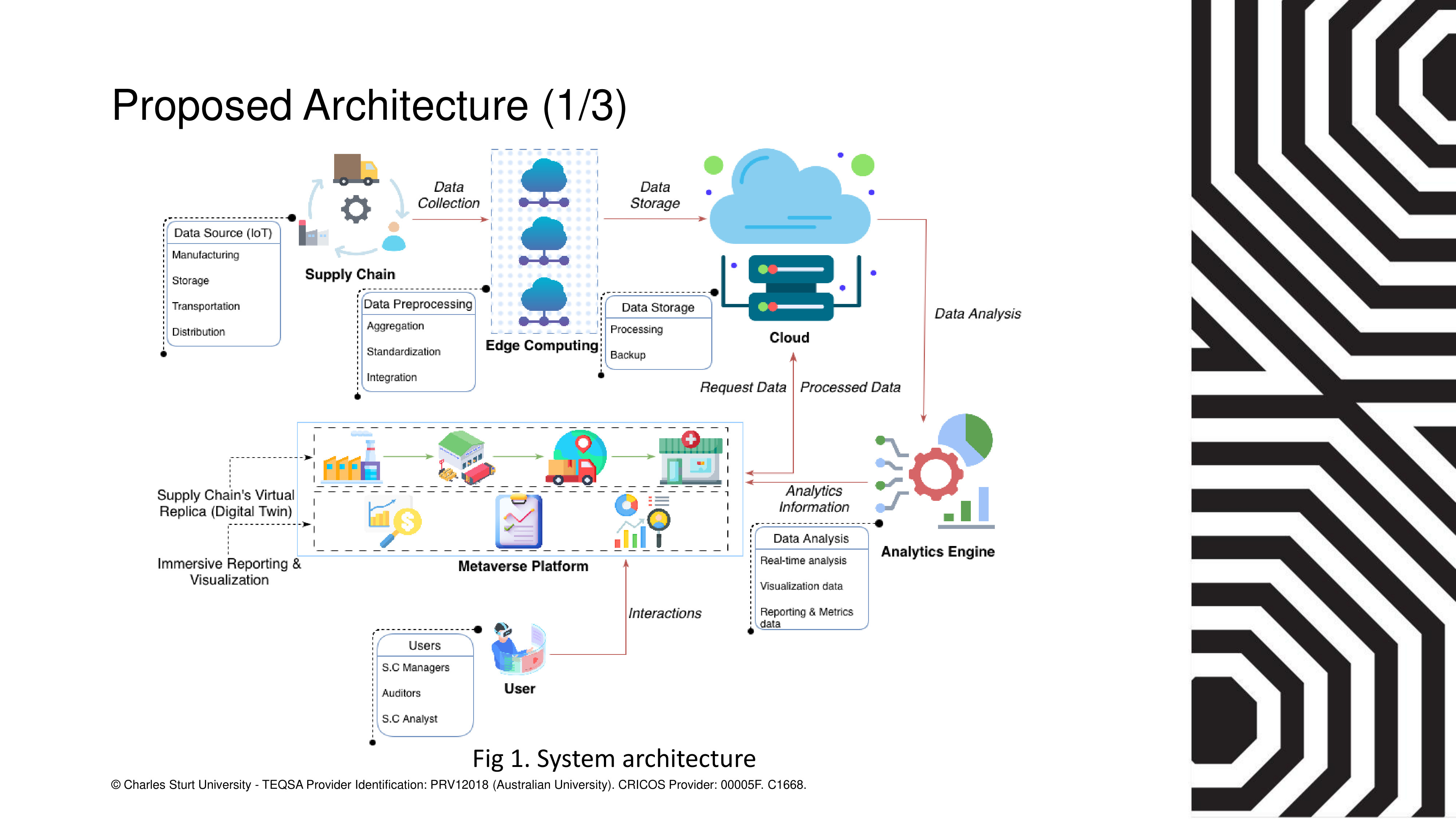 |
This is the proposed architecture. At the top we have data sources such as the supply chain sensors and operational data.
The edge layer handles continuous capture and early processing to improve reliability and reduce latency.
The cloud layer provides scalable storage, backup, and compute for historical evidence.
Then the analytics engine transforms streams into insights like anomalies and risk indicators.
Finally, the metaverse platform hosts supply chain replica where auditors or inspectors can interact with evidence in context, collaborate, and generate outputs.
Here’s a quick example of why metaverse helps more.�In a warehouse cold room, we sometimes see temperature spikes. A dashboard tells us when it happened and how high it went—but not where or why.
With the metaverse, the inspector opens the cold room’s virtual replica and sees a 3D heatmap of sensor data. The spikes keep appearing near the door corner. Replaying the timeline shows they line up with door openings and forklift traffic.
So we don’t just record a deviation, we find the cause and take action, for example improve airflow, change door policy, or move sensors. That’s the key benefit, context and cause, not just the numbers.
|
| ICACT20260305 Slide.08
[Big Slide]
|
Chrome Click!! |
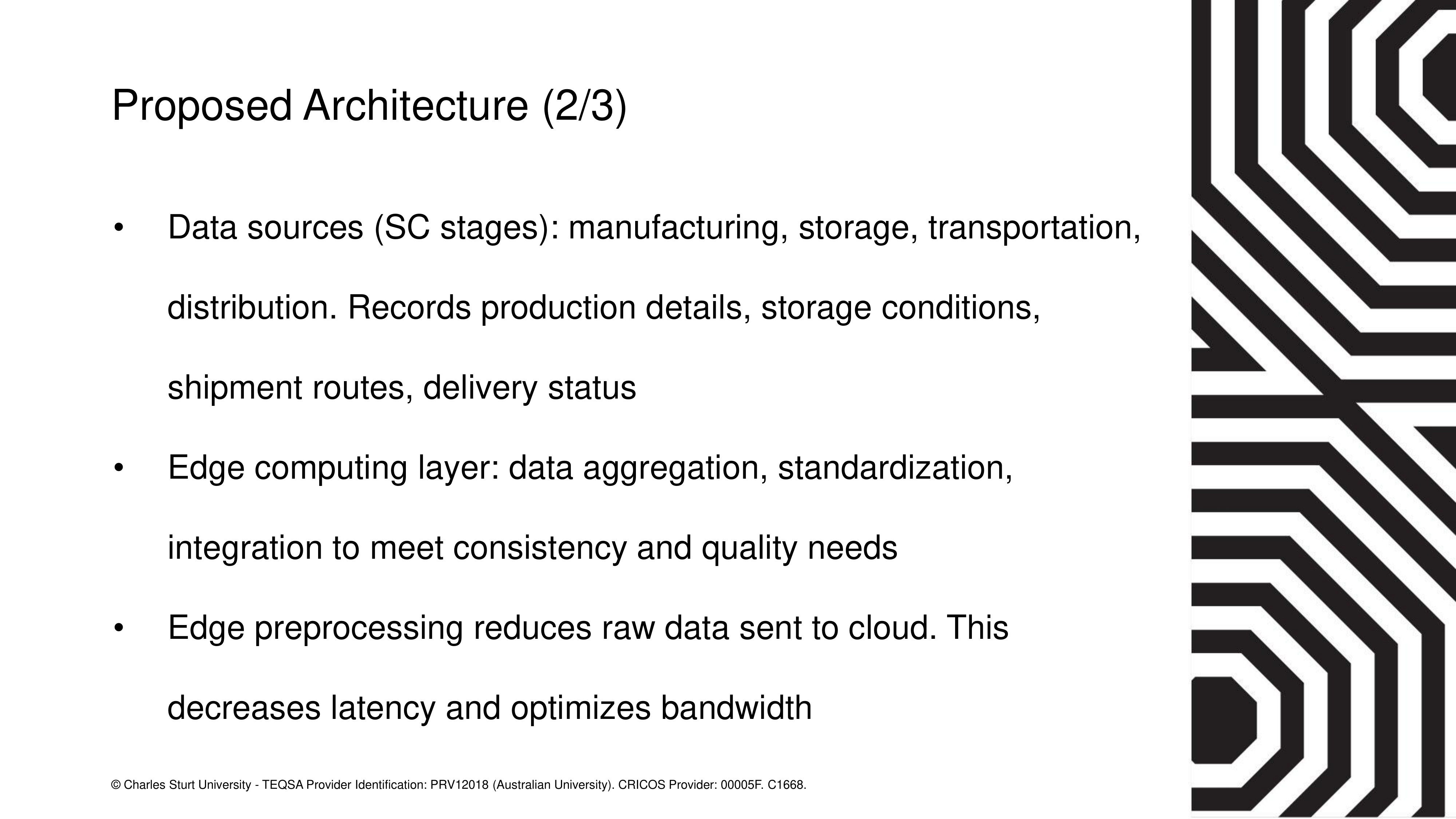 |
This explains what each block in proposed architecture does. We start with data sources across manufacturing, storage, transportation, and distribution, covering production details, storage conditions, shipment routes, and delivery status. That data first goes to the edge computing layer for aggregation, standardization, and integration, so it meets consistency and quality requirements. Doing this at the edge reduces the amount of raw data sent to the cloud, which helps latency and bandwidth.
|
| ICACT20260305 Slide.09
[Big Slide]
|
Chrome Click!! |
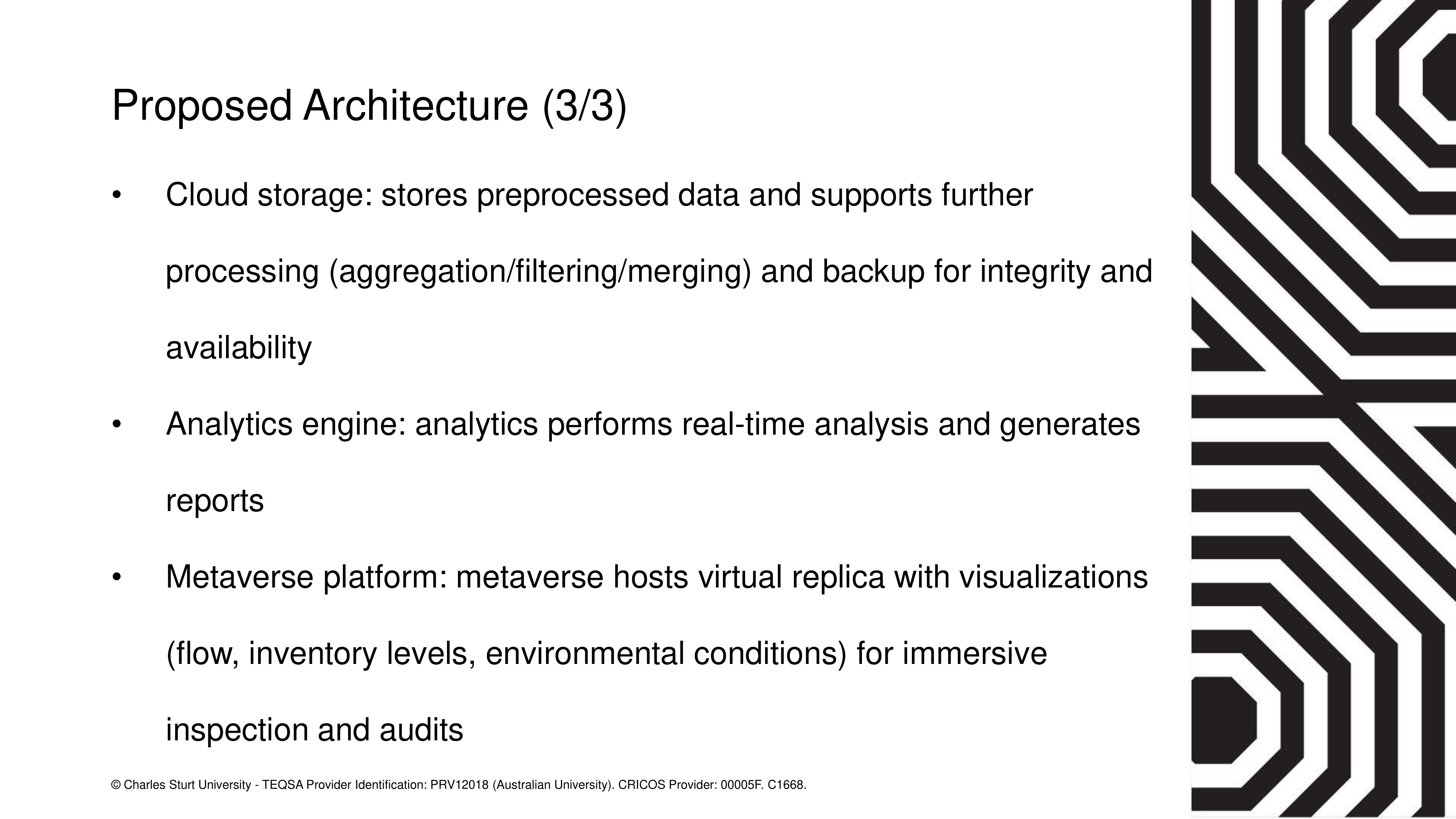 |
The cloud stores the processed data with metadata, can apply further transformations like filtering or merging, and includes a backup step to protect integrity and availability. Then the analytics engine produces real-time insights, and the metaverse platform hosts a virtual replica, showing supply chain flow, inventory, and environmental conditions for inspection and auditing.
|
| ICACT20260305 Slide.10
[Big Slide]
|
Chrome Click!! |
 |
Here’s the brief end-to-end system workflow. An auditor or inspector initiates an audit or inspection request within the metaverse interface.
The system in the background retrieves data, performs edge preprocessing, then stores and backs it up in the cloud.
Analytics runs to produce insights such as trends, anomalies, and a risk signal.
Those results are then visualized or simulated inside the metaverse environment so the user can review evidence contextually.
The workflow ends with an inspection decision and an evidence-backed report.
|
| ICACT20260305 Slide.11
[Big Slide]
|
Chrome Click!! |
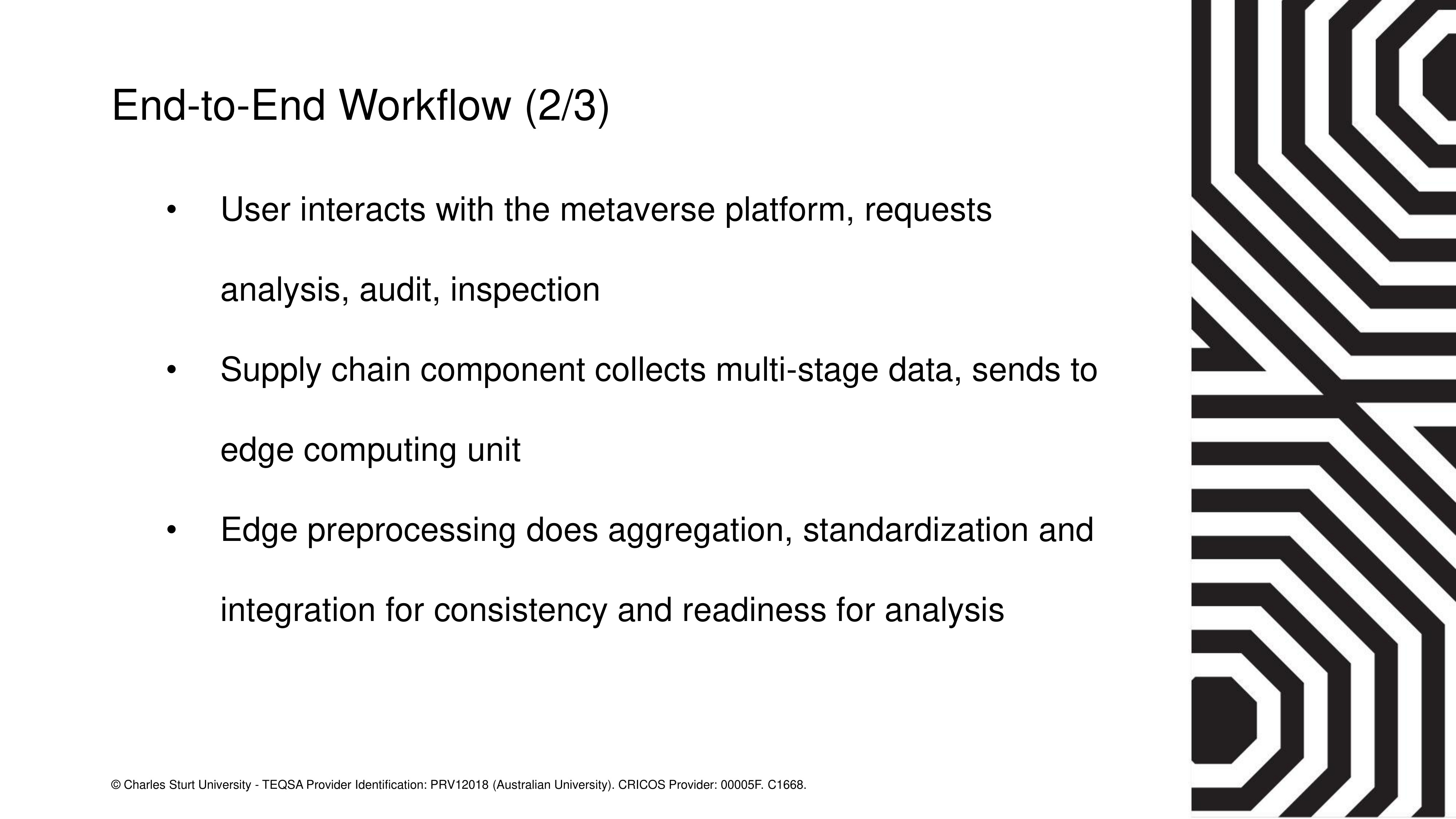 |
Further detailed explanation: Fig. 2 shows the end-to-end workflow as a sequence. The user starts in the metaverse platform, which is the main interface for analysis, audits, and inspections. In parallel, the supply chain component collects data from different stages and sends it to the edge computing unit. The edge preprocesses it through aggregation, standardization, and integration so the data is consistent and ready for analysis.
|
| ICACT20260305 Slide.12
[Big Slide]
|
Chrome Click!! |
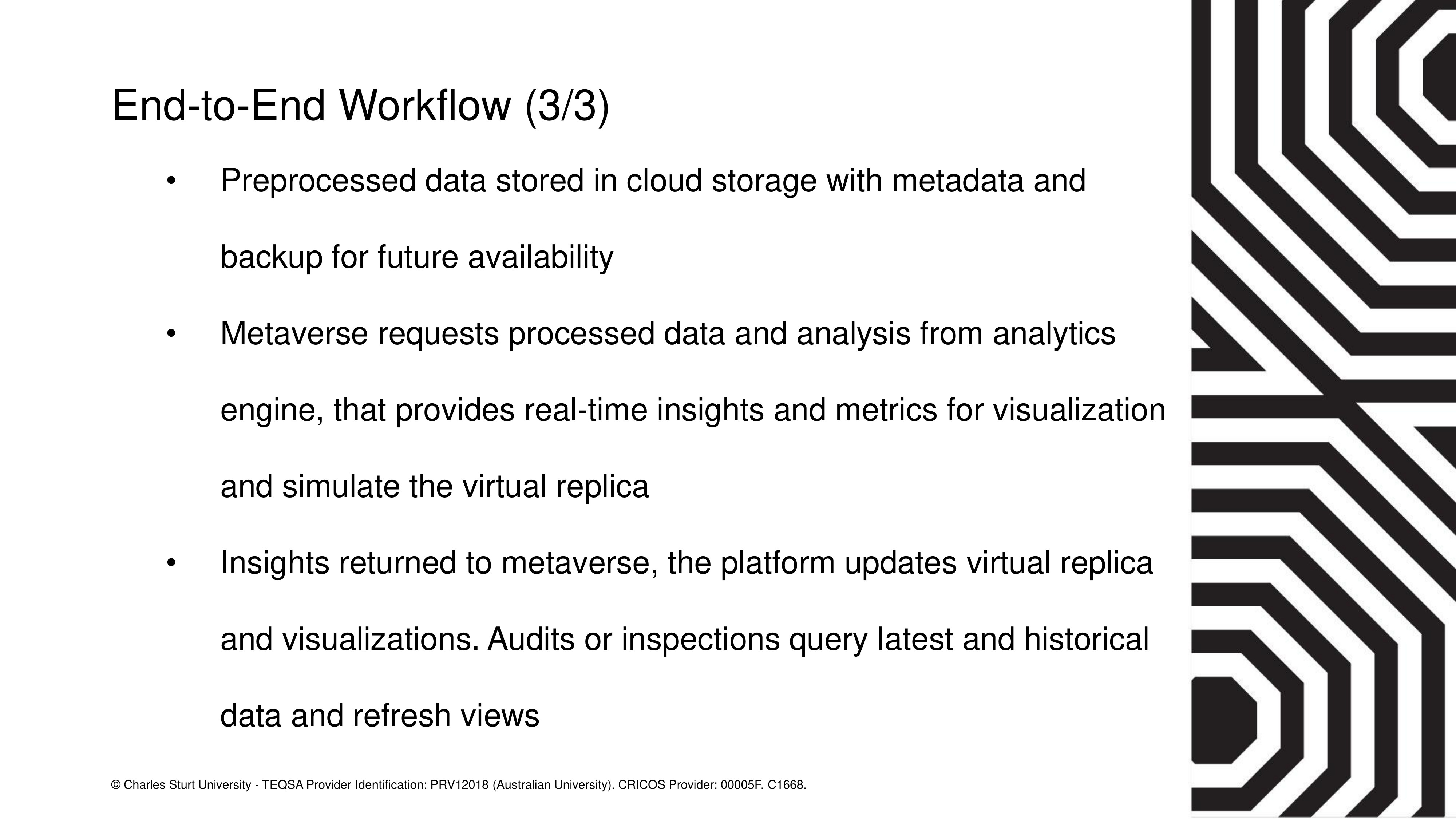 |
Then it’s stored in cloud storage with metadata, and a backup process protects integrity and availability. Next, the metaverse requests the processed data and analytics results the analytics engine runs real-time analysis and returns insights. Finally, the metaverse updates the virtual replica and visualizations, and during audits or inspections it pulls both the latest updates and historical records to support the process.
|
| ICACT20260305 Slide.13
[Big Slide]
|
Chrome Click!! |
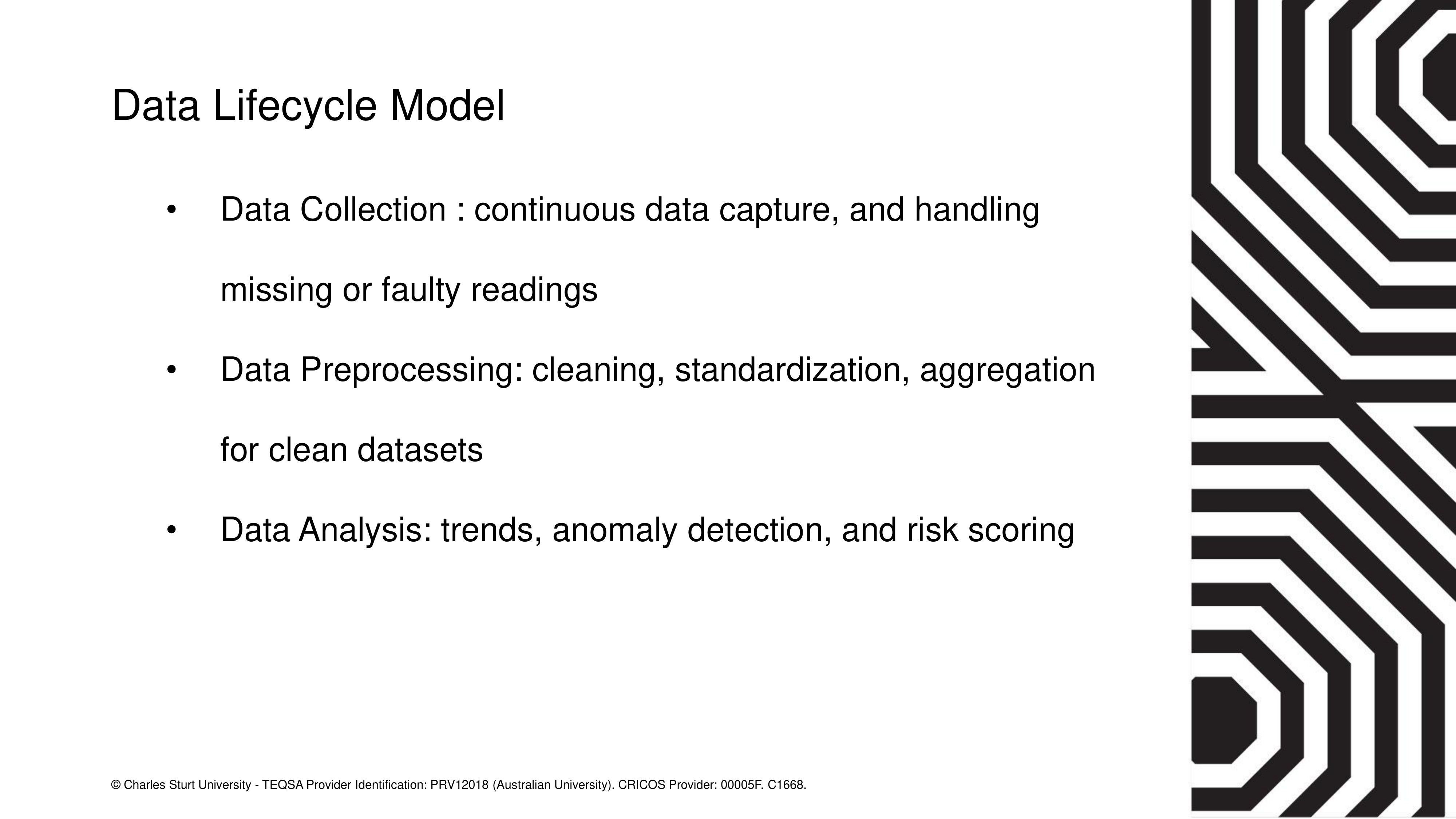 |
We present the data lifecycle model as three algorithms, but the key point is the pipeline: collect, preprocess, analyze, and report.
Algorithm 1 covers continuous data collection while handling missing or faulty readings.
Algorithm 2 focuses on cleaning, standardization, and aggregation so the datasets are ready for further processing.
Algorithm 3 performs exploratory analysis, trend detection, anomaly detection, and then produces a risk score or report.
The output is a structured compliance or inspection report.
|
| ICACT20260305 Slide.14
[Big Slide]
|
Chrome Click!! |
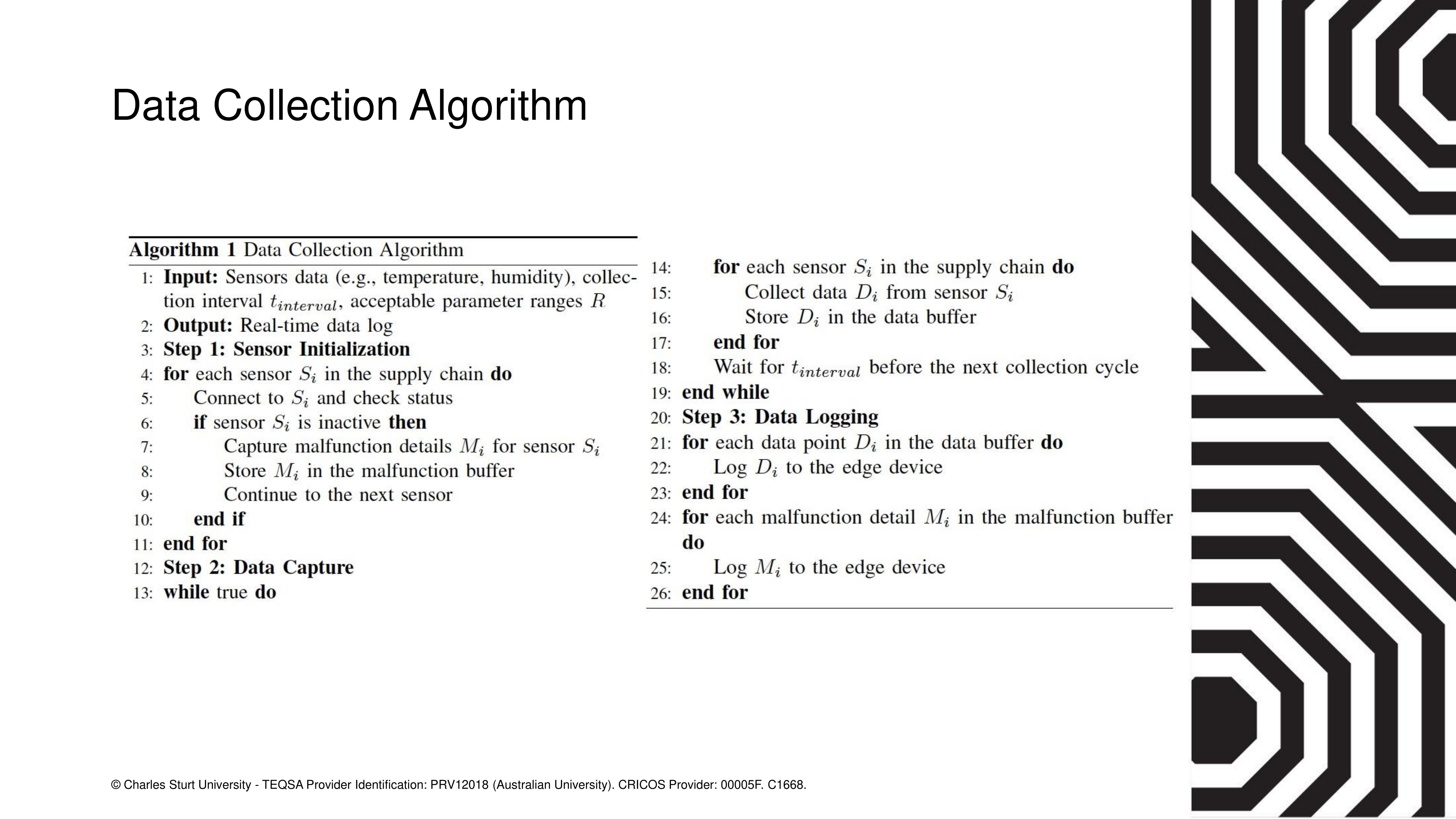 |
Algorithm 1 is about continuous evidence capture. Instead of collecting data only when an audit happens, we log sensor and operational events throughout the supply chain. We also handle practical issues like missing values or faulty devices. The output is a reliable, time-stamped evidence stream that later supports inspection replay and reporting.
|
| ICACT20260305 Slide.15
[Big Slide]
|
Chrome Click!! |
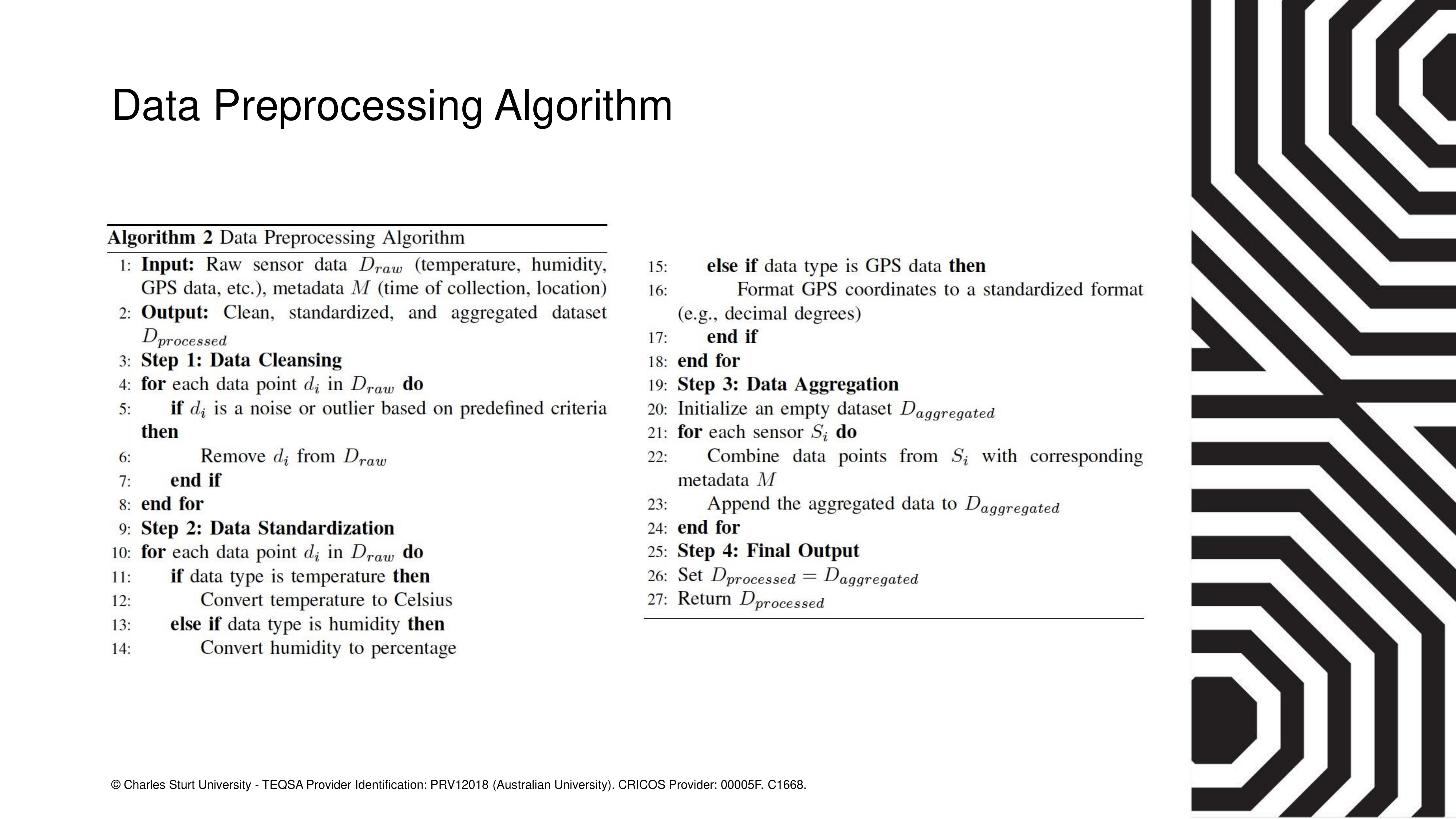 |
Algorithm 2 turns raw logs into audit-ready inputs. Compliance monitoring needs consistent units, aligned timestamps, and a standardized schema, otherwise analytics and inspection decisions become unreliable. We also aggregate at meaningful levels like batch or shipment so inspectors can query and view evidence efficiently inside the metaverse.
|
| ICACT20260305 Slide.16
[Big Slide]
|
Chrome Click!! |
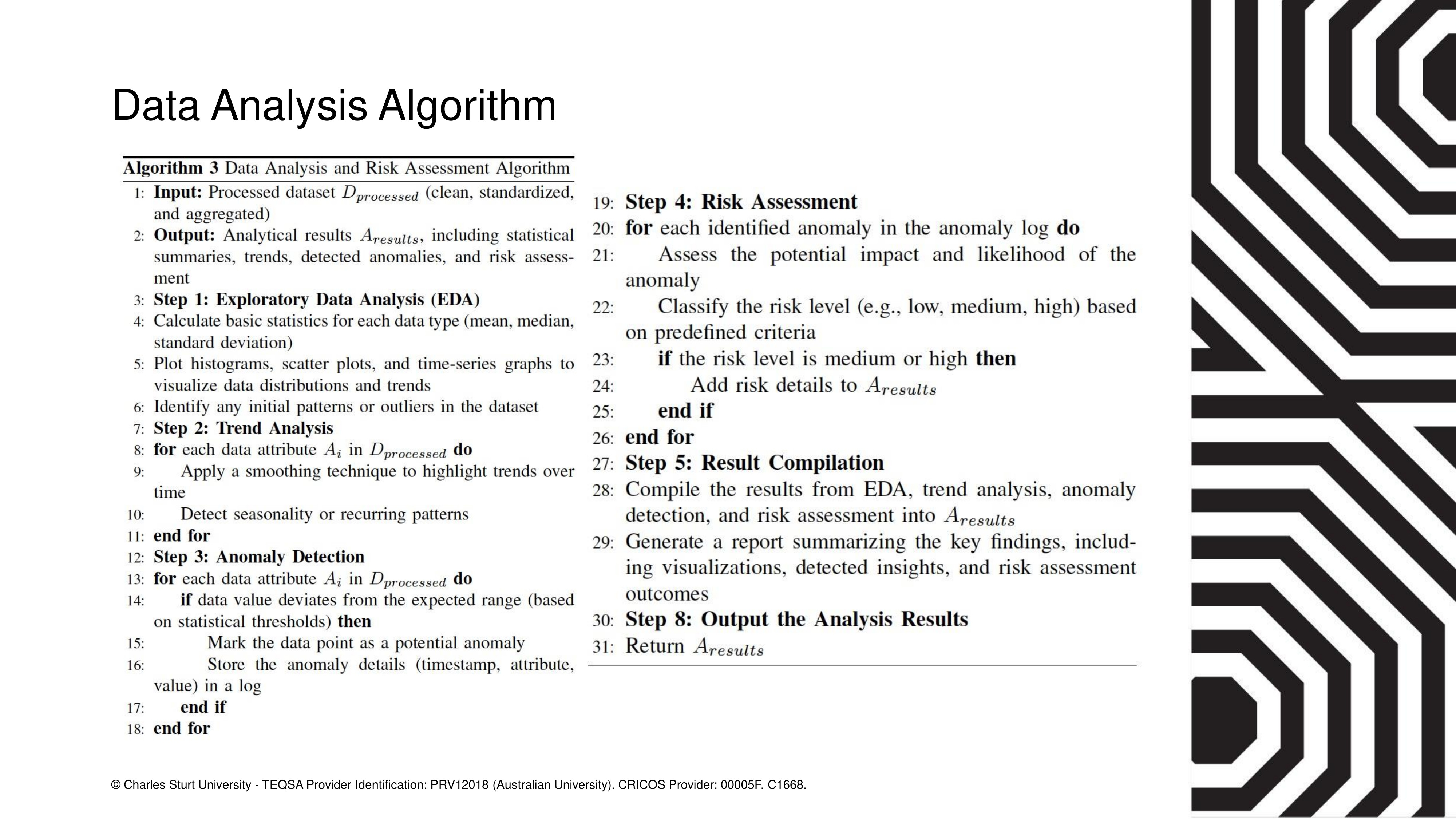 |
Algorithm 3 converts data into inspection priorities. After preprocessing, we analyze trends and detect abnormal patterns, then translate them into a risk signal based on severity and duration, and relevant context. This supports compliance-oriented monitoring because inspectors don’t have to sift through everything, they see prioritized findings in the metaverse, verify them via replay/context, and generate evidence-backed reports.
|
| ICACT20260305 Slide.17
[Big Slide]
|
Chrome Click!! |
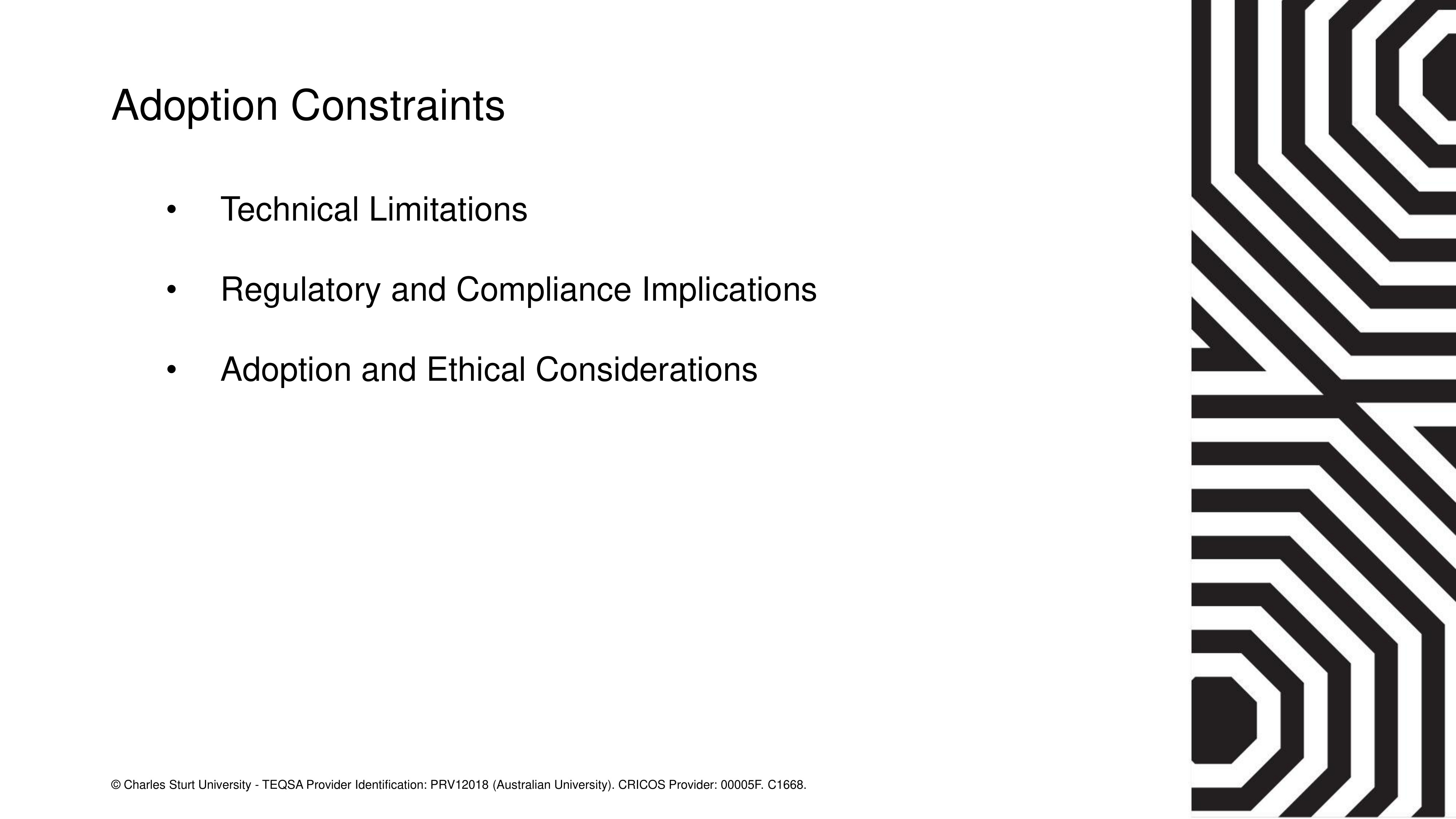 |
We also discuss constraints because deployment is not just a technical problem. �
Technically, connectivity, latency, and device limitations can impact real-time immersive experiences.
From a compliance perspective, there is a need of strong access control, data integrity, and comply with local law where the system is being operated.
On adoption, user training and metaverse usability matter, and privacy and trust is also a concern.
|
| ICACT20260305 Slide.18
[Big Slide]
|
Chrome Click!! |
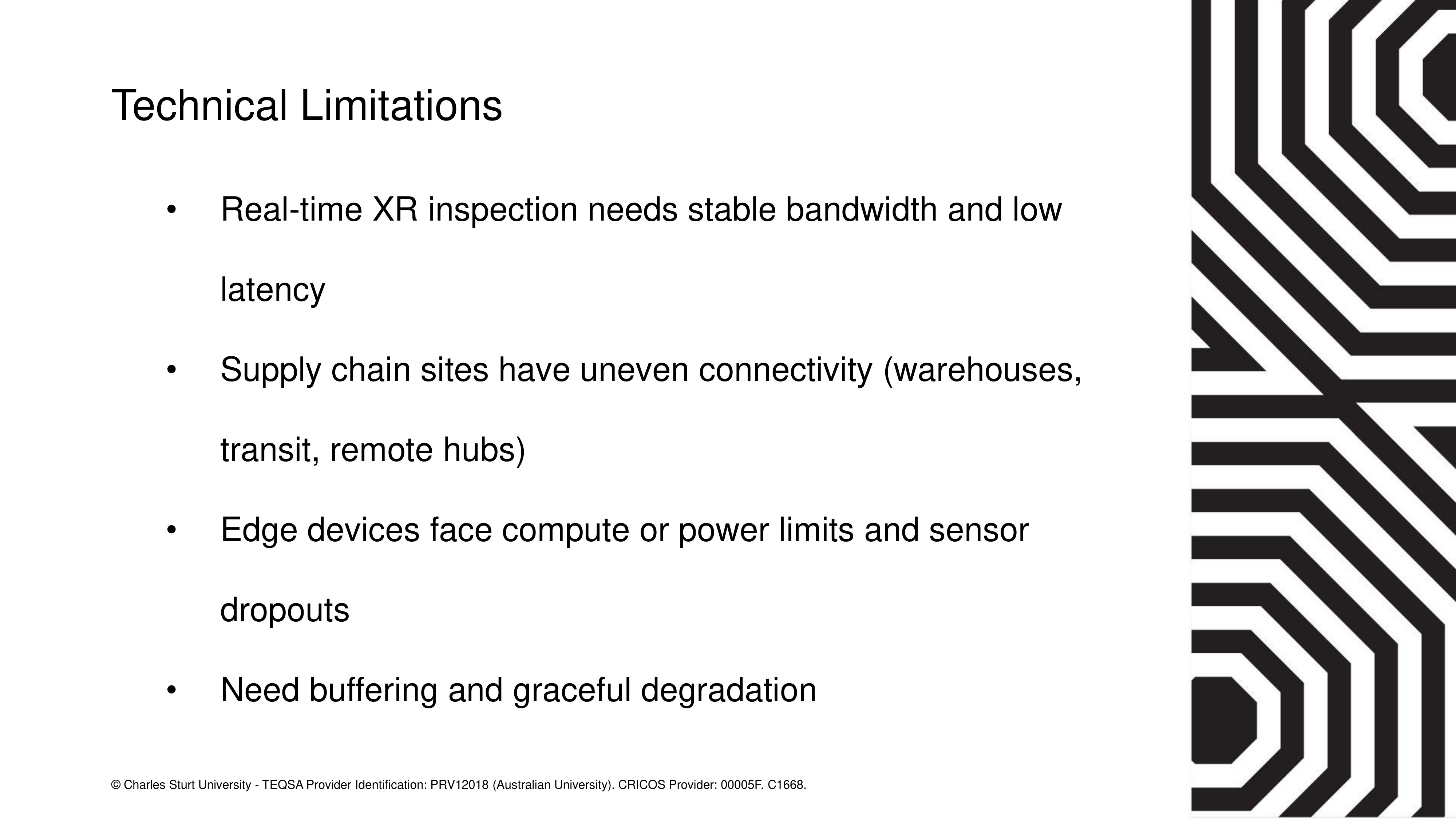 |
First constraint is technical limitations. Immersive inspection works best when data updates smoothly, but supply chain environments don’t always have reliable connectivity. Sensors can drop readings and edge devices have limited compute. So the architecture must be engineered for reliability, buffer data at the edge, synchronize when connectivity returns, and degrade gracefully so inspection can continue without breaking the workflow.
|
| ICACT20260305 Slide.19
[Big Slide]
|
Chrome Click!! |
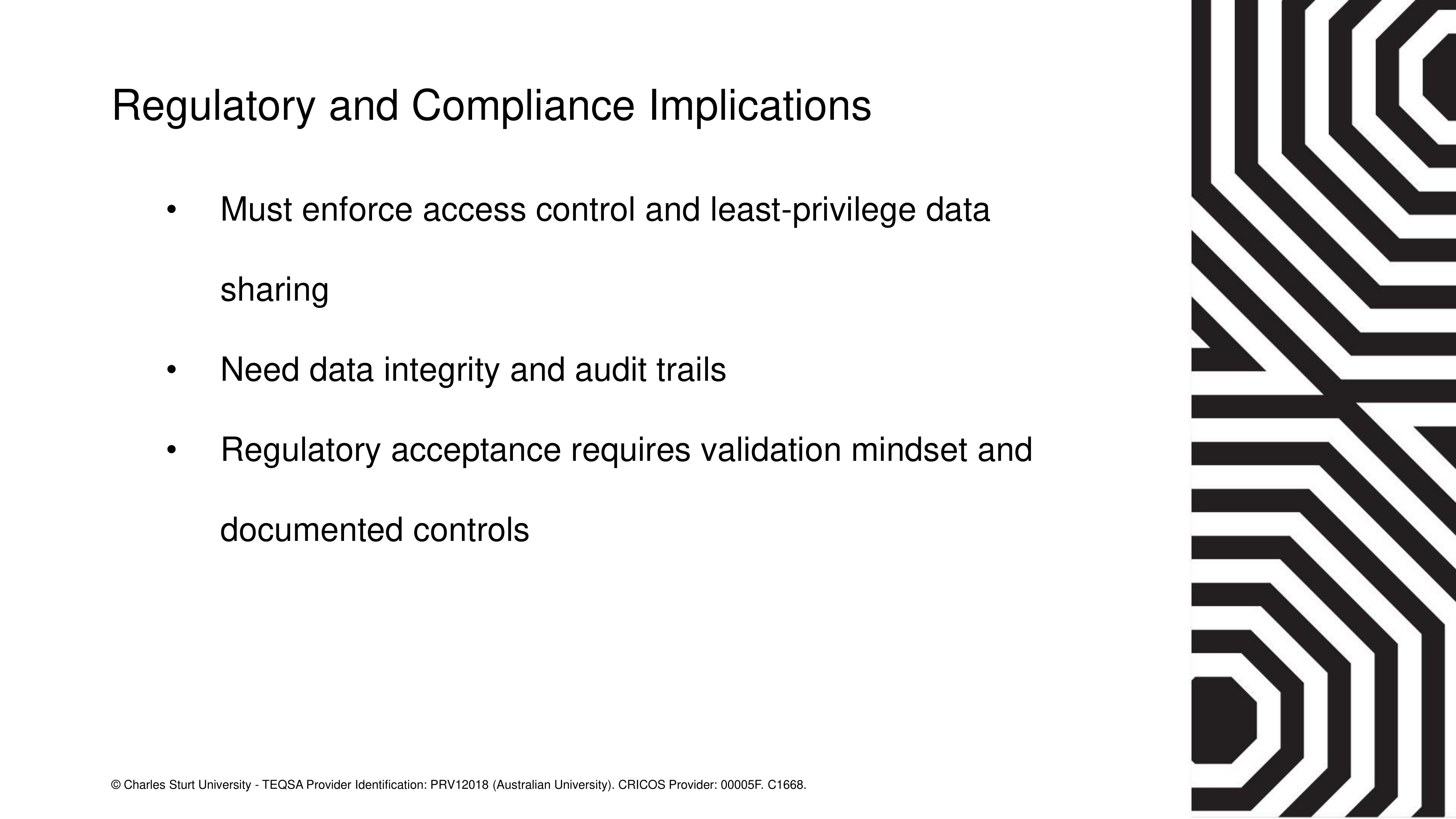 |
Second is regulatory and compliance readiness. A metaverse system cannot be cool tech it must meet the same expectations as regulated systems such as controlled access, integrity of evidence, and traceable inspection actions. Privacy is critical because digital twins can expose sensitive operational details. So adoption depends on strong governance such as role-based access, logging, and documentation that supports compliance and builds stakeholder trust.
|
| ICACT20260305 Slide.20
[Big Slide]
|
Chrome Click!! |
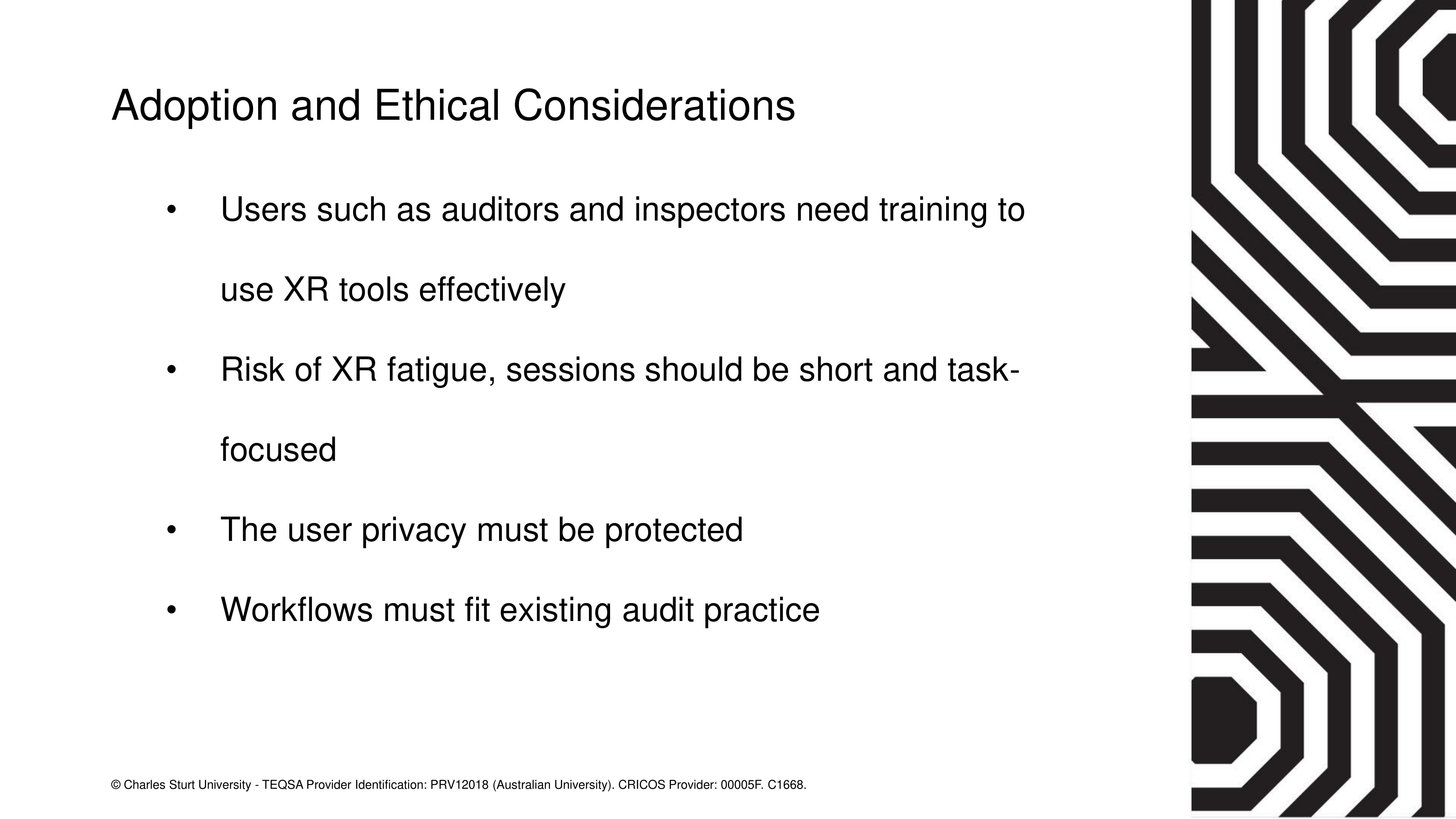 |
Third is adoption and ethical considerations. Even if the tech works, auditors need training and the interface must support their existing tasks, review evidence, annotate, collaborate, and report. XR fatigue is real, so the best approach is short, targeted inspections rather than long sessions. In practice, adoption is smoother when the metaverse complements traditional reporting first, then gradually takes on more inspection steps.
|
| ICACT20260305 Slide.21
[Big Slide]
|
Chrome Click!! |
 |
To wrap up, our main contribution is a blueprint that makes metaverse supply chains audit-ready. By combining edge and cloud data handling with analytics and metaverse digital twins, we enable inspections based on continuous evidence rather than periodic documents. Inspectors can review deviations with context, replay events, see where they occurred and produce more defensible reports.
|
| ICACT20260305 Slide.22
[Big Slide]
|
Chrome Click!! |
 |
Next, we want to implement a prototype and evaluate it in a realistic setting. The evaluation should include technical metrics like latency and data completeness, analytics metrics like anomaly accuracy, and operational metrics like inspection time saved. We also need user studies to confirm the metaverse interface improves decision-making without increasing workload. Finally, we can strengthen provenance and governance for higher compliance readiness.
|
| ICACT20260305 Slide.23
[Big Slide]
|
Chrome Click!! |
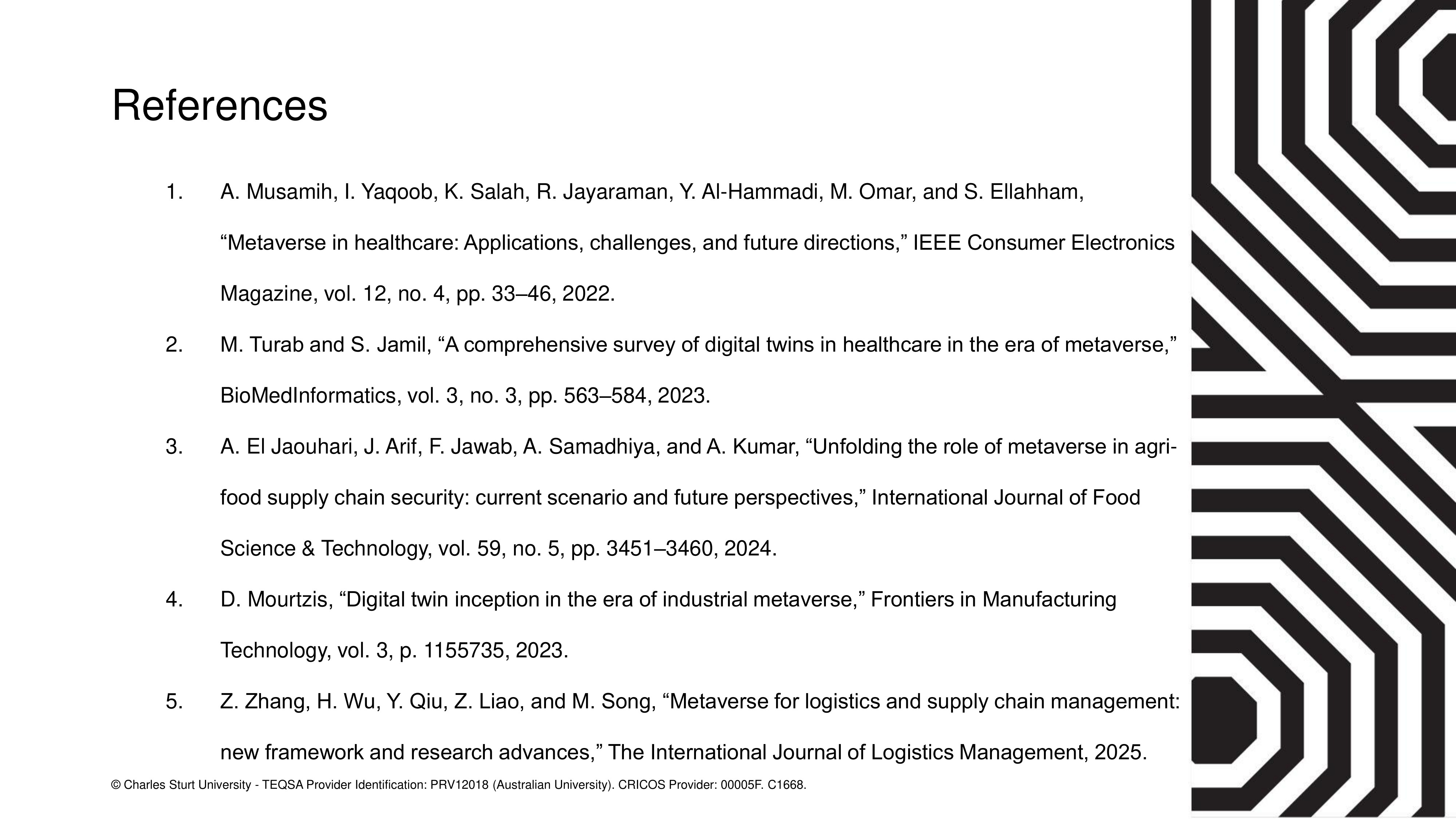 |
These are the important studies related to this research work.
|
| ICACT20260305 Slide.24
[Big Slide]
|
Chrome Click!! |
 |
Thank you. Please ask questions in the question and answer section. |















